組立ラインのかんばん
2号ラインがタクト60秒になる。水すまし1人で4工程に部品を届け続けられるか、それとも工程が部品待ちで止まるか。
ログインせずStudioで開き、保存済みの結果を確認して2D・3Dで編集できます。自分のAIをつなぐにはログインしてください。プロジェクトファイルは無料で利用できます。実行条件はアカウントで確認してください。現在の空間を置き換える前に確認が表示されます。
第2ラインをタクト60秒に変える前に、水すまし1人で各工程への補充が間に合うか。2人にするか、かんばんを増やすか、部品置き場でのピッキングを速めるか。
- 想定する利用者
- 生産技術者、ライン責任者、生産改善・物流の計画担当者
- 価値の生み方
- 採用・ラック購入・部品置き場の再配置の前に、工程の部品切れがライン脇の在庫不足か、水すましの時間不足かを確かめます。この設定では水すましが制約になり、かんばんを増やしても停止を先延ばしにするだけです。2人にするかピッキングを25秒にすると停止が解消します。実行時間の短縮が費用削減につながるのは、実際に残業や人員が減る場合です。かんばん追加で増える場所・在庫と、2人目の費用を、実測した時間と合わせて判断してください。
- 現場のデータを用意する
- The takt and shift plan, parts per unit and bin quantities for every part, a time study of the water spider (collecting cards, picking and setting in bins), the route on your floor plan, station cycle times, rework rates and pallet quantities. One trip per card and all times here are assumptions.
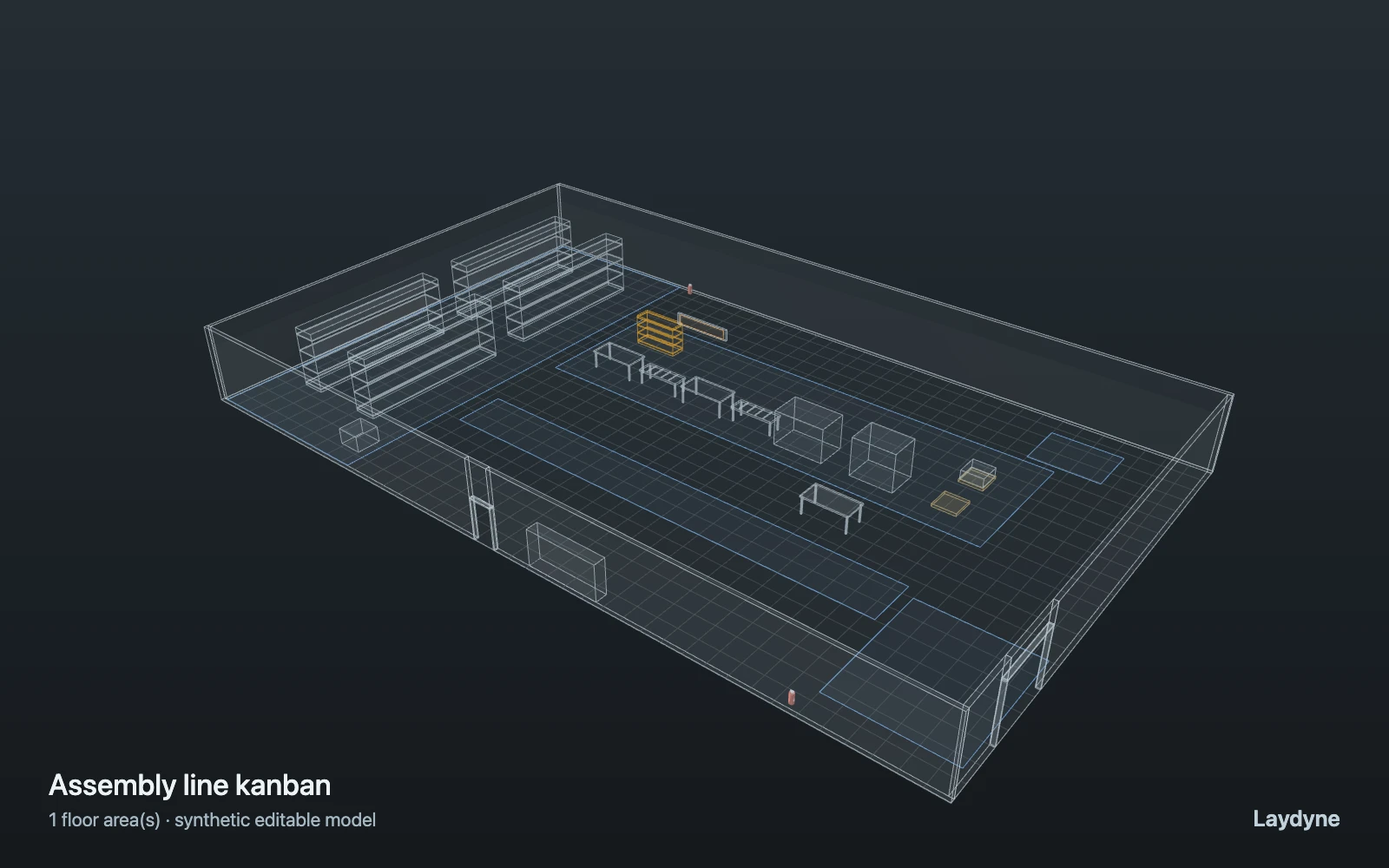
確認できるモデル
Line 2 at its new 60 s takt: 120 units pass four stations (42–66 s each) joined by roller buffer conveyors of 2, then inspection (40 s); 10 % are reworked (2–5 min) and inspected again. Each station takes its parts from the kanban flow rack behind it, two bins a part (brackets 12, harnesses 6, M5 screws 48, covers 6; a unit takes 2, 1, 8 and 1). An emptied bin sends its card to the kanban post and the water spider on a trip: collect the card (5 s), pick a full bin in the supermarket (45 s), set it into the rack (20 s), walk back to the base at 1 m/s. A station whose rack is empty stands starved, holding its unit, until the bin arrives; every 4 good units make a pallet the forklift takes to shipping. Each card is its own trip (no collecting several on one loop); no breakdowns, breaks, congestion in the aisles or costs. Figures are assumptions, not measured.
1つだけ変える
同じ120台の生産で、水すまし1人と2人、各部品のかんばんを3枚にする案、部品置き場のピッキングを25秒にする案を比較します。さらにバッファ1個・4個、タクト65秒、手直し率15%も試せます。
結果を読む
Stations turning red while their rack is empty, units queuing at the line head, the water spider’s utilization and when the last pallet ships. With one spider the stations stand starved for about an hour in all and the run ends 27 minutes later; a second spider or a 25 s pick removes the stops; a third card cuts them by about 40 % but finishes no sooner, because the spider stays the bottleneck.
開始時の入力を見る
- タクト:ユニットを開始する間隔(秒)
- 60
- シフトのユニット数
- 120
- Water spiders on the milk run
- 1
- Kanban cards (bins) for each part
- 2
- Picking a bin in the supermarket (s)
- 45
- バッファコンベヤが保持できるユニット数
- 2
- 検査で不合格になるユニット(%)
- 10
エージェントの数、経路、資源の定義も、プロジェクトのJSONに保存されます。
同じ需要で処理能力を比較
3回の実行の平均、シード11〜13。 観測期間180分。 到着、形状、シードの組は、すべての案で同じです。
| シナリオ | 完了 | 平均待ち時間 | 平均サイクル時間 | ブロック |
|---|---|---|---|---|
| 1 water spider · 2 cards | 230 | 6m 43s | 10m 05s | 0 |
| 2 water spiders · 2 cards | 230 | 52s | 4m 14s | 0 |
| 1 water spider · 3 cards | 230 | 4m 21s | 7m 42s | 0 |
| 1 water spider · 25 s pick | 230 | 1m 09s | 4m 24s | 0 |
待ちの平均は到着したジョブを対象とし、終わっていない待ちも含みます。サイクル時間の平均は完了したジョブだけが対象です。これらは説明用の計算であり、実測した現場の実績、売上、安全性の評価ではありません。
エンジン、状態、出力の注記
process-des-2.7.0. 状態: 1 water spider · 2 cards: 完了; 2 water spiders · 2 cards: 完了; 1 water spider · 3 cards: 完了; 1 water spider · 25 s pick: 完了. 実行状態が「完了」でも、すべての仕事が成功したとは限りません。停止した仕事の件数と警告を確認してください。
- エンジンの警告はありません。
エンジンの入力と保存した比較は、保存したプロジェクトとともに残ります。軌跡が限られている場合、影響するのは再生の詳細で、集計の指標には影響しません。
この作例の記事
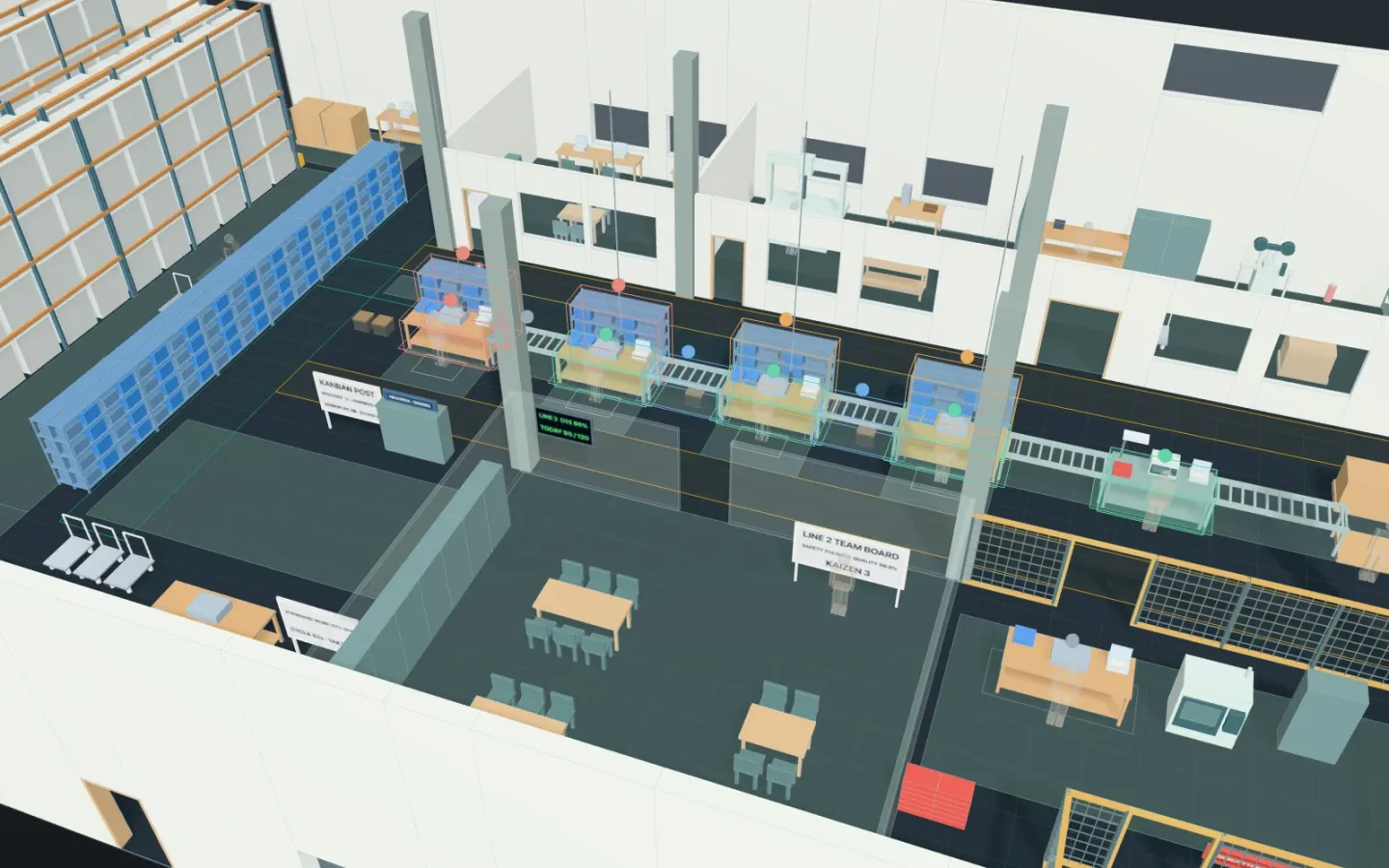
2Dで計画し、3Dで確認、プロジェクト全体を保存
- 開いて調整する。 2Dと3Dを切り替え、部品、フロア、入力を編集します。どちらのビューも同じモデルを表します。
- エージェントを無料で接続する。 サインインして、AI接続を選び、ChatGPT・Claude・Codex・Claude Codeのいずれかを接続します。作例の確認、レイアウトの編集、経路の確認を依頼してください。
- チェックポイントを保存する。 プロジェクト → プロジェクトファイル、またはエージェントにプロジェクト全体の書き出しを依頼します。後で取り込むと、フロア、シナリオ、保存した比較、選択したビューが復元されます。
- 案を比較。 同じ需要条件で新しい運用比較を計算できます。実行条件・内蔵AI・手動クラウド保存の上限はアカウントで確認してください。