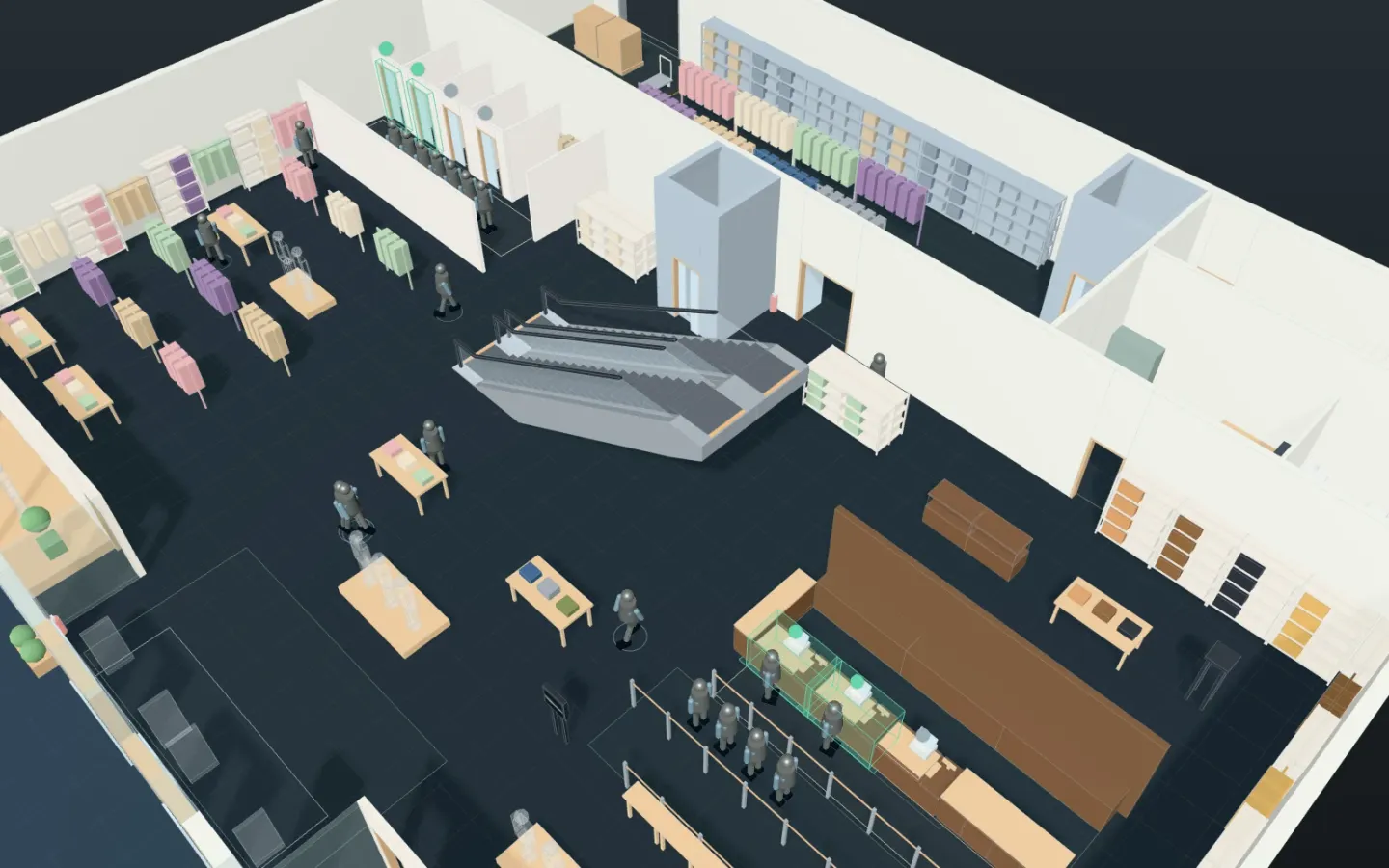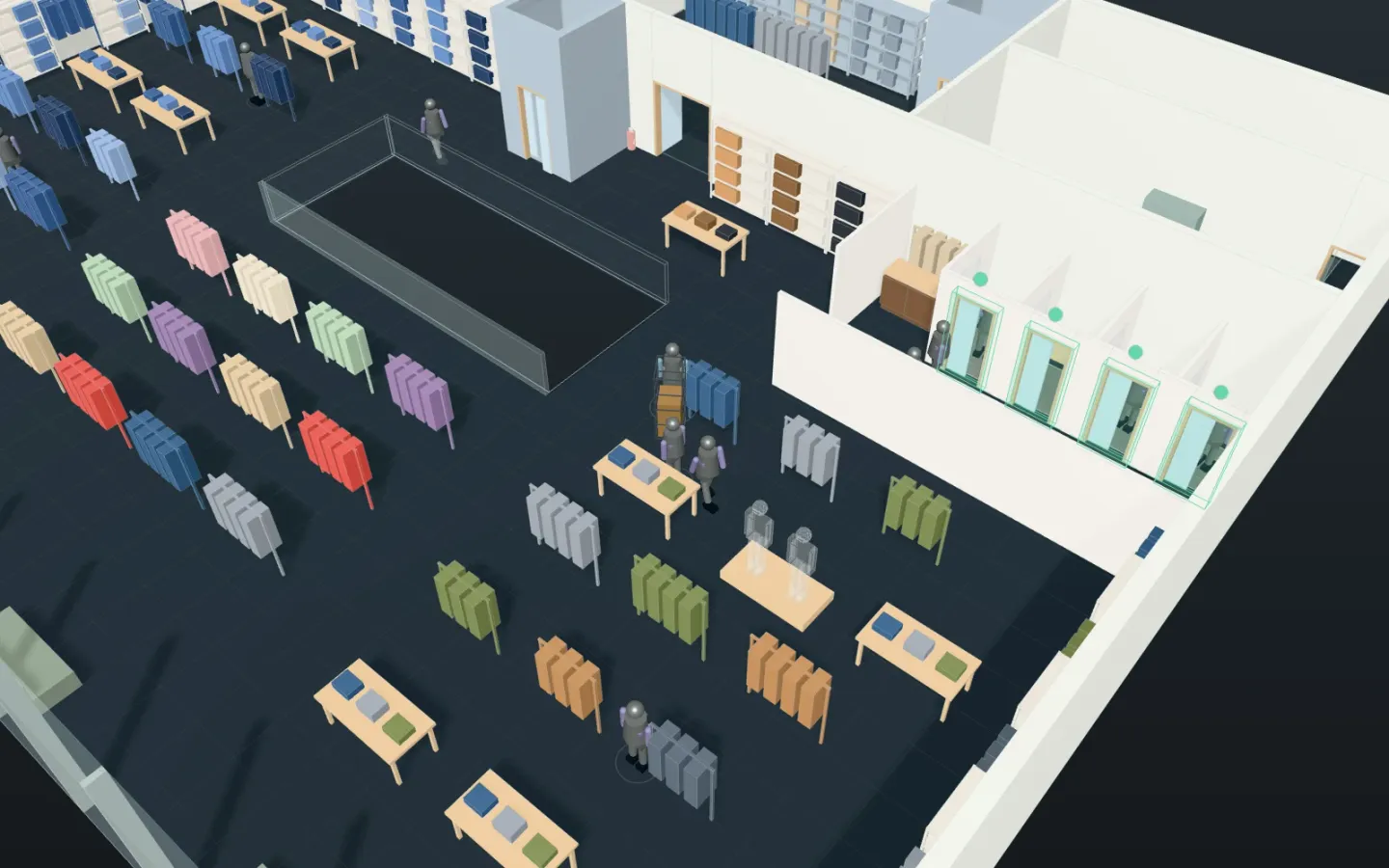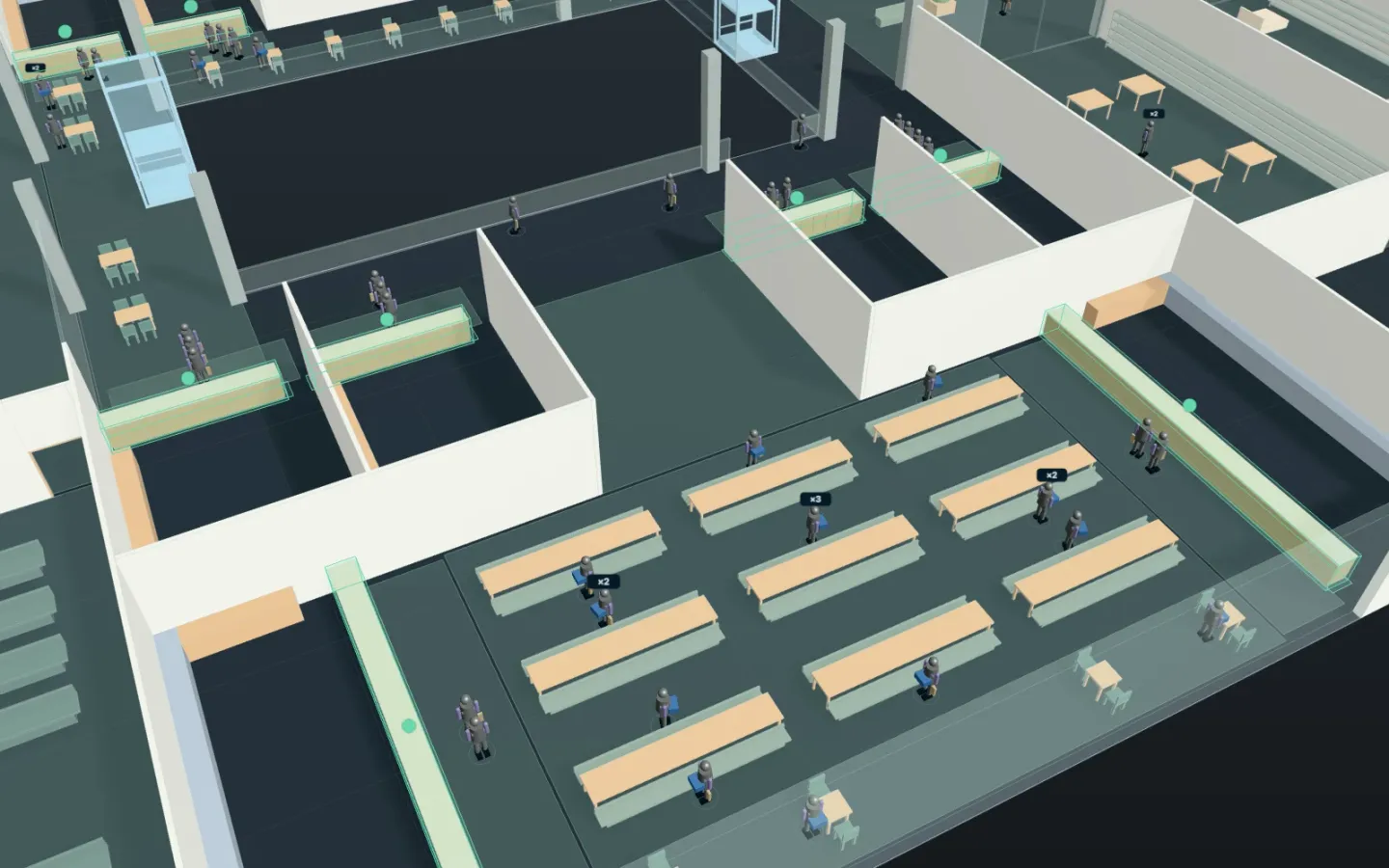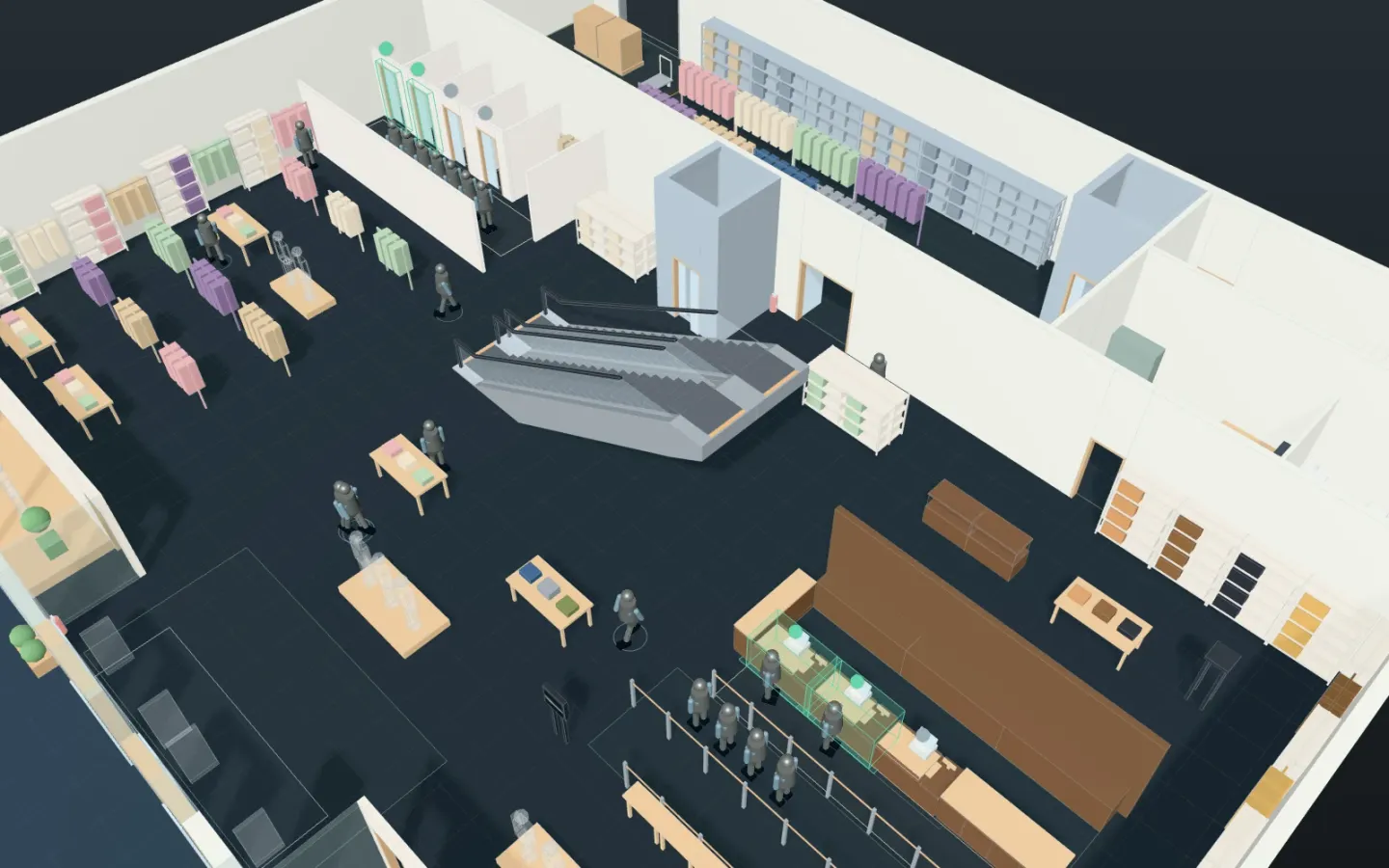
Adding capacity at one place on a shop floor can move the wait to the next place. Here are three examples an AI simulated in earlier articles, with the tool it calls over MCP (sweep_process_parameters); each figure is the mean of 20 runs.
1. By set-up
| Example | Set-up | What is measured | Result |
|---|---|---|---|
| A clothing store's Saturday | Two fitting rooms per floor, two checkouts (now) | Time in the shop | 19.3 minutes |
| A clothing store's Saturday | Three fitting rooms per floor, two checkouts | Time in the shop | 15.2 minutes |
| A clothing store's Saturday | Four fitting rooms per floor, three checkouts | Time in the shop | 10.8 minutes |
| A clothing store's Saturday | Two fitting rooms per floor, two checkouts (now) | Checkout wait | 2.2 minutes |
| A clothing store's Saturday | Three fitting rooms per floor, two checkouts | Checkout wait | 6.1 minutes |
| A clothing store's restocking (a Saturday) | One assistant (now) | Time a shelf stands empty | 34.0 minutes |
| A clothing store's restocking (a Saturday) | Two assistants | Time a shelf stands empty | 12.1 minutes |
| A clothing store's restocking (a Saturday) | Three assistants | Time a shelf stands empty | 10.0 minutes |
| A shopping centre's food court (a Saturday) | A mean cooking time of 120 seconds (now) | The wait at the four noodle stalls | 2.0 to 2.7 minutes |
| A shopping centre's food court (a Saturday) | A mean cooking time of 90 seconds | The wait at the four noodle stalls | 1.0 to 1.4 minutes |
| A shopping centre's food court (a Saturday) | A mean cooking time of 60 seconds | The wait at the four noodle stalls | 0.5 to 0.6 minutes |
2. What they show
- Add at one place, and the queue moves on. Three fitting rooms per floor cut the clothing store's time in the shop from 19.3 minutes to 15.2 minutes, but the checkout wait grows from 2.2 minutes to 6.1 minutes. With four fitting rooms and three checkouts, the time in the shop is 10.8 minutes.
- The second assistant helps most. With one assistant a shelf stands empty for 34.0 minutes, with two for 12.1 minutes and with three for 10.0 minutes; what remains is the time to pick the sizes, carry them and fill the shelf.
- Shorten each step. Cutting the mean cooking time from 120 seconds to 90 takes the waits at the four noodle stalls from 2.0 to 2.7 minutes down to 1.0 to 1.4 minutes, and cutting it to 60 seconds takes them to 0.5 to 0.6 minutes.
3. The articles
4. How to ask an AI
For this shop's Saturday (as drawn, two floors), compare the fitting-room and checkout waits and the time in the shop with two to four fitting rooms per floor and two or three checkouts, 20 runs each.
5. What this does not cover
- The number of shoppers, and the times to try on, pay, restock and cook, are each article's assumptions. Put your own shop's records in their place.