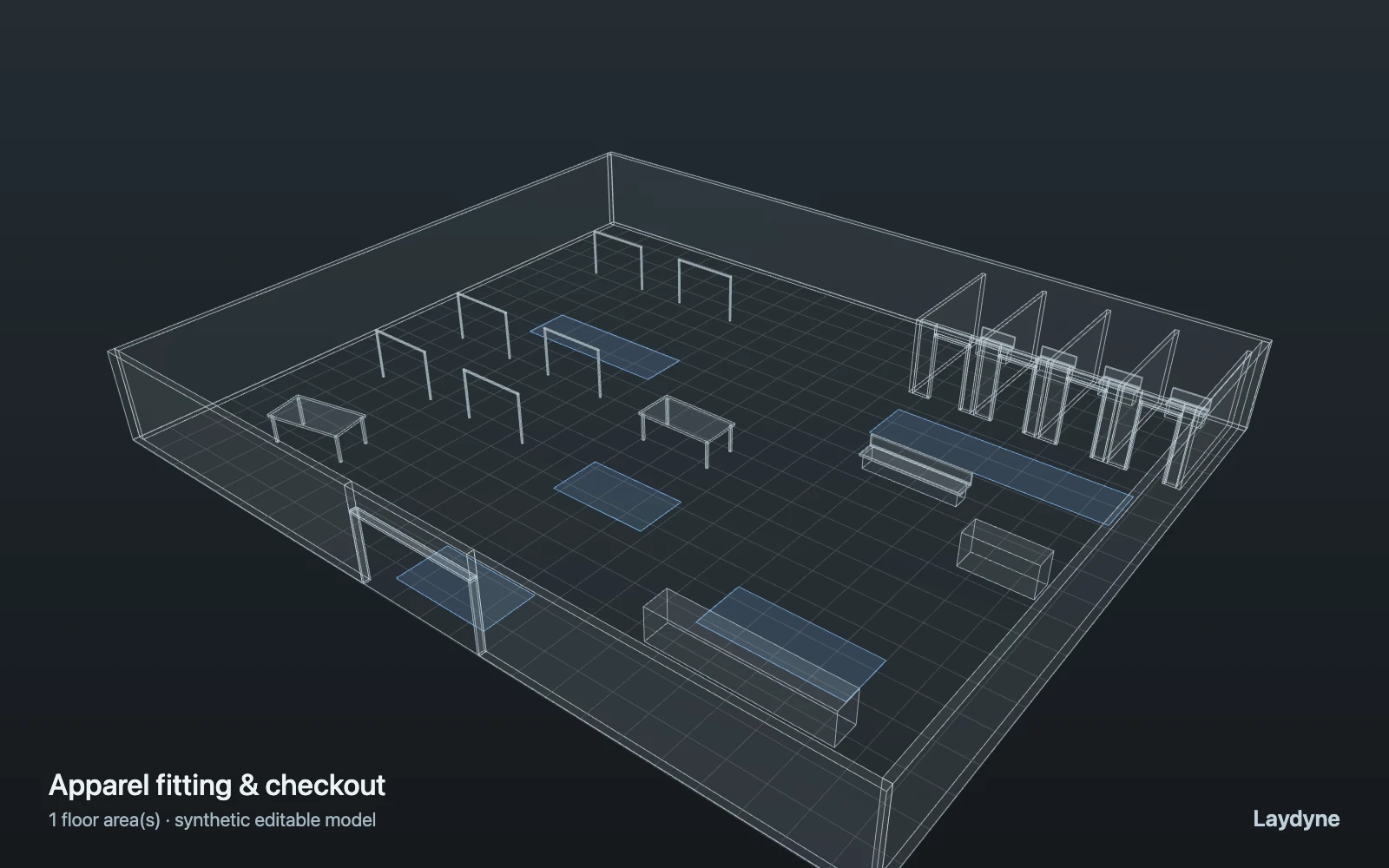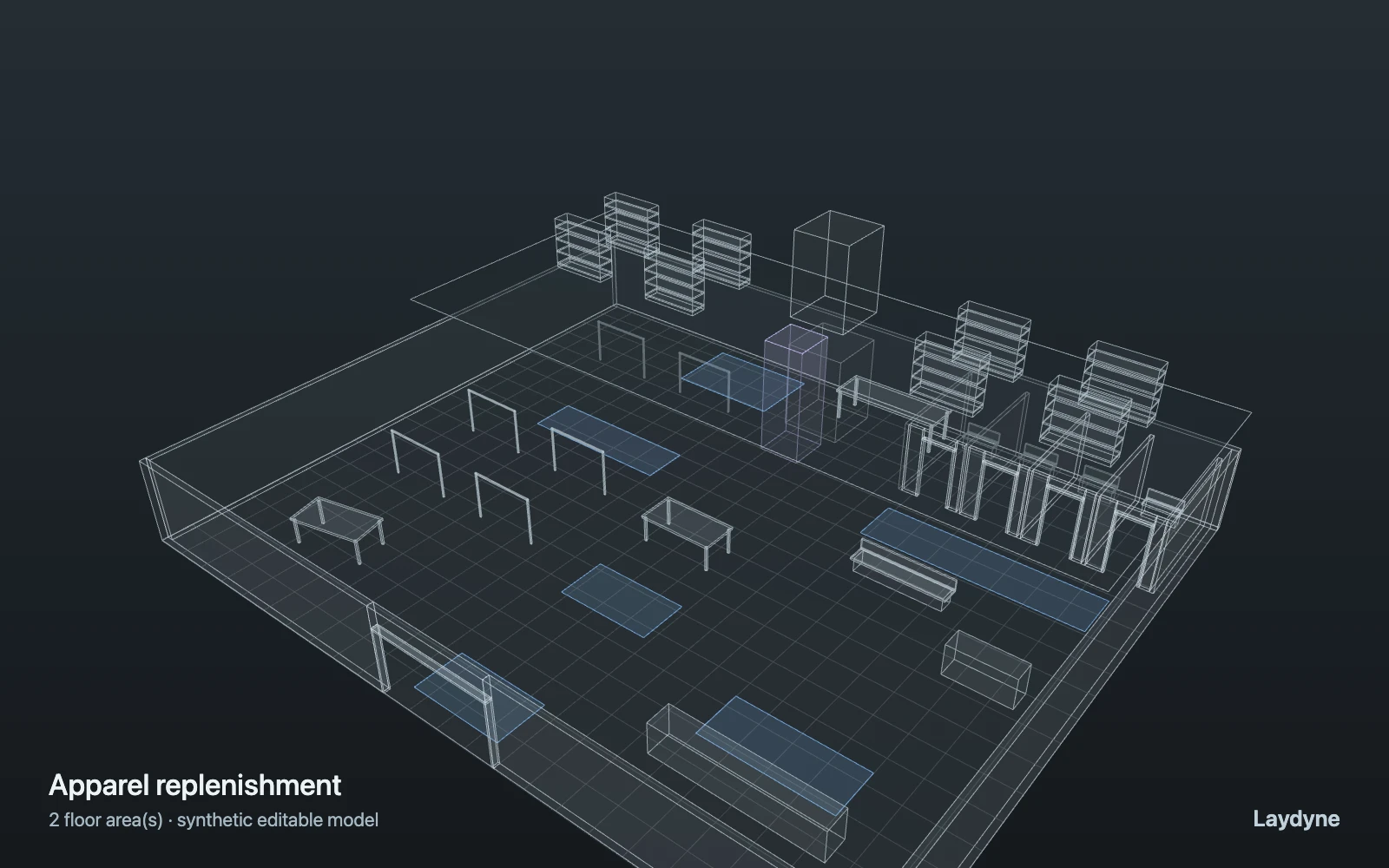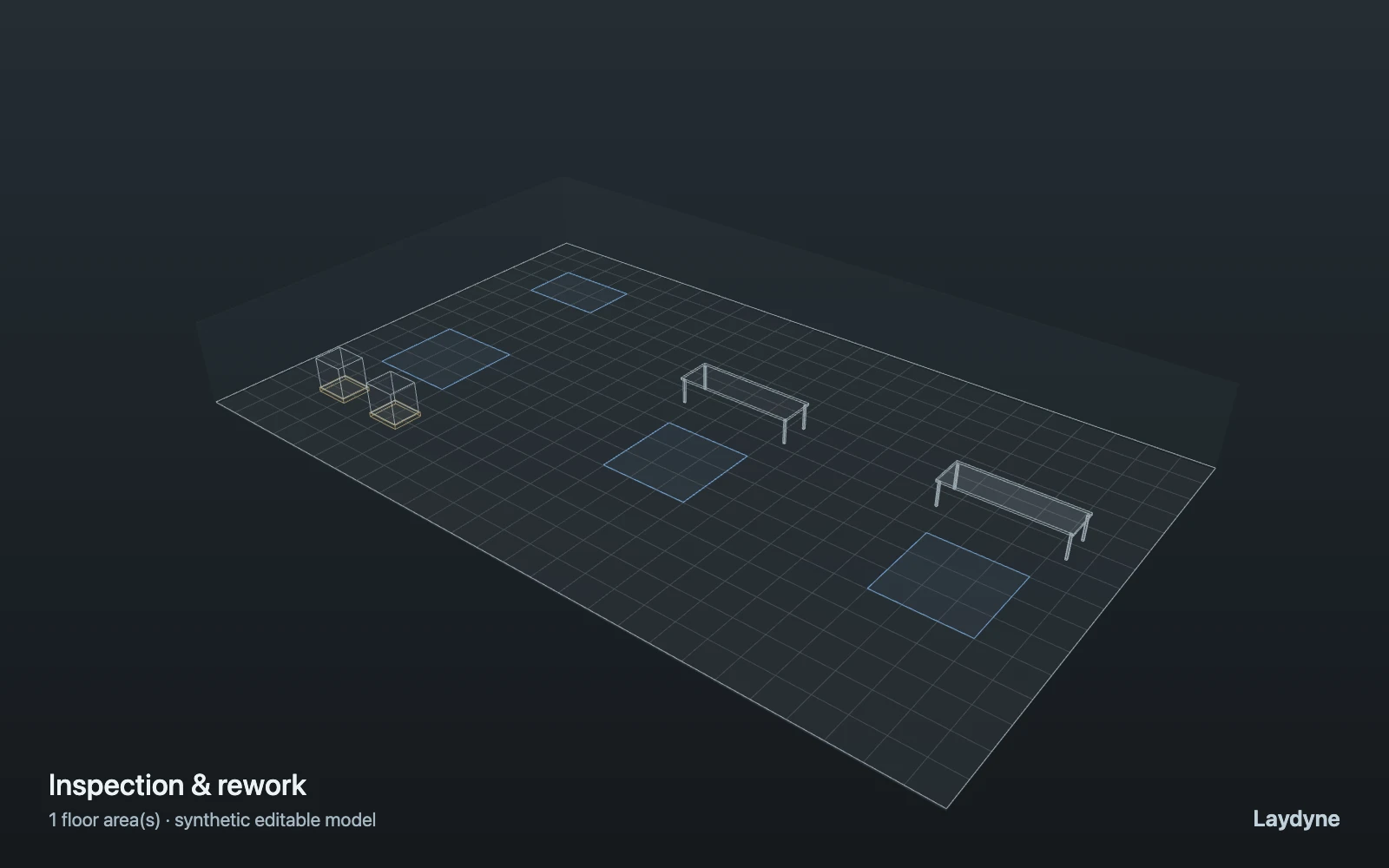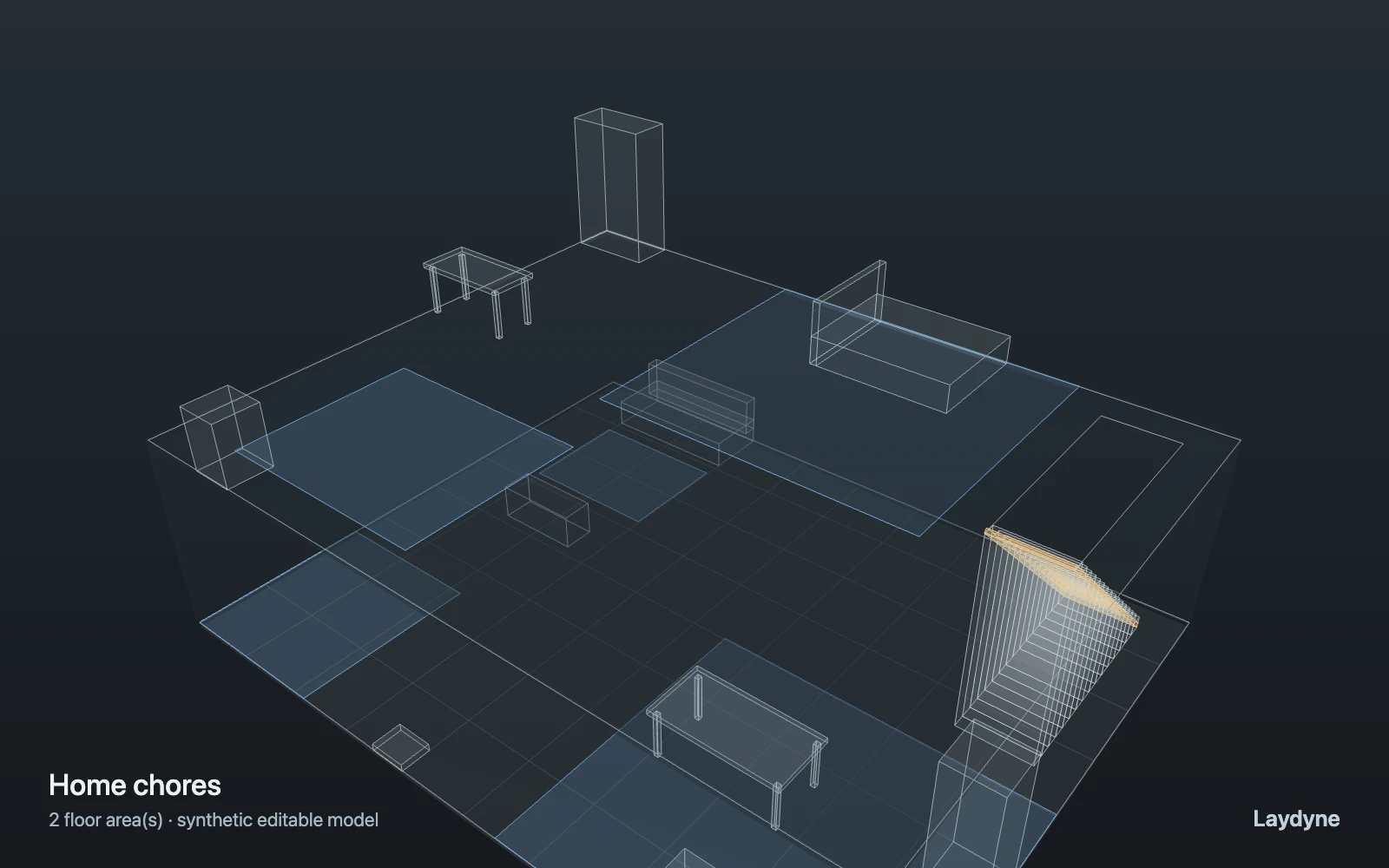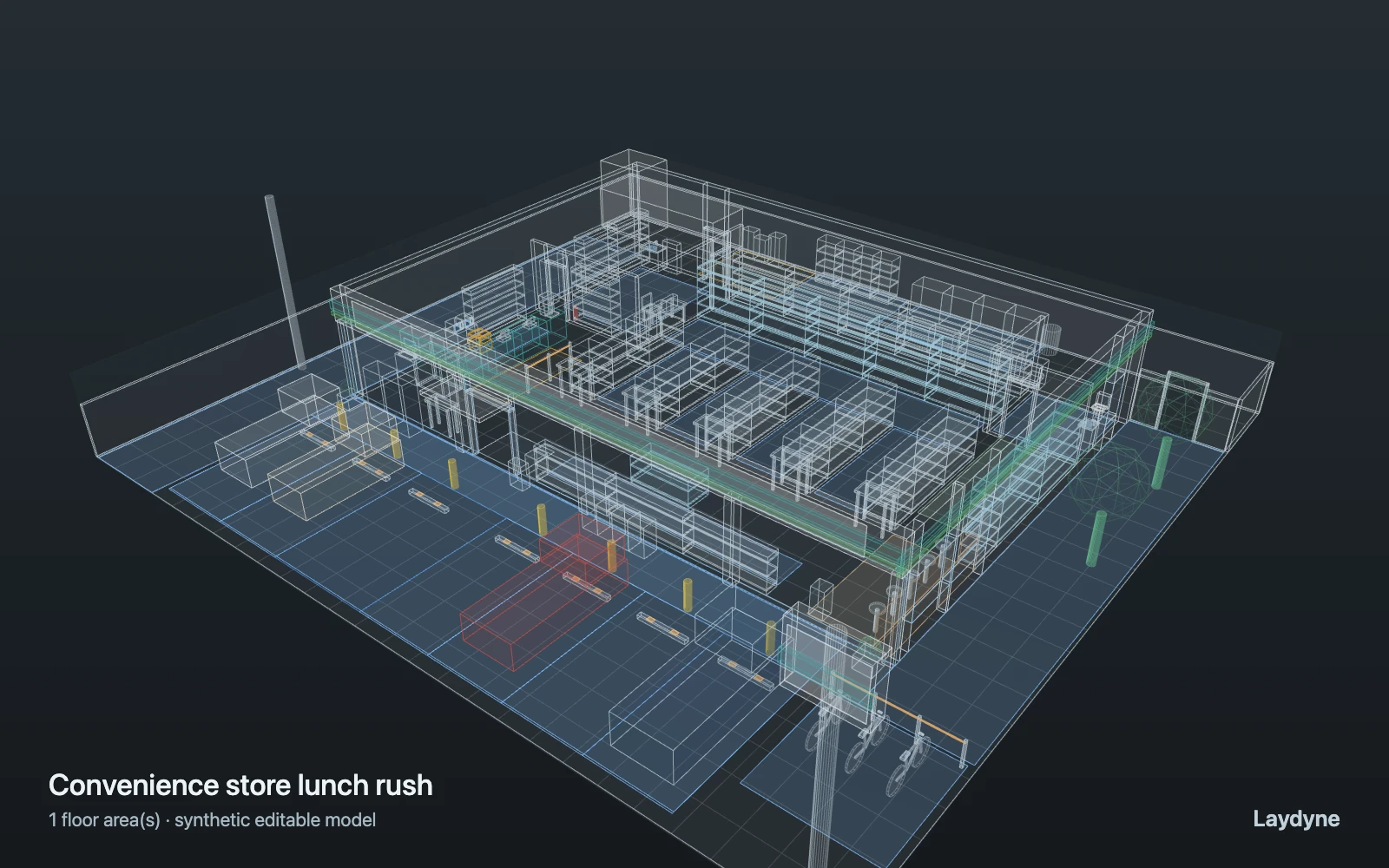
Plan staffing, compare equipment capacity or change a layout before committing to it. Each example names the person making the decision, what to compare and the site data needed to make the result useful. Open the project to test your own conditions.
Free 2D + 3D editing, MCP, route checks and project filesPro Run your scenarios, use built-in AI and save to the cloud
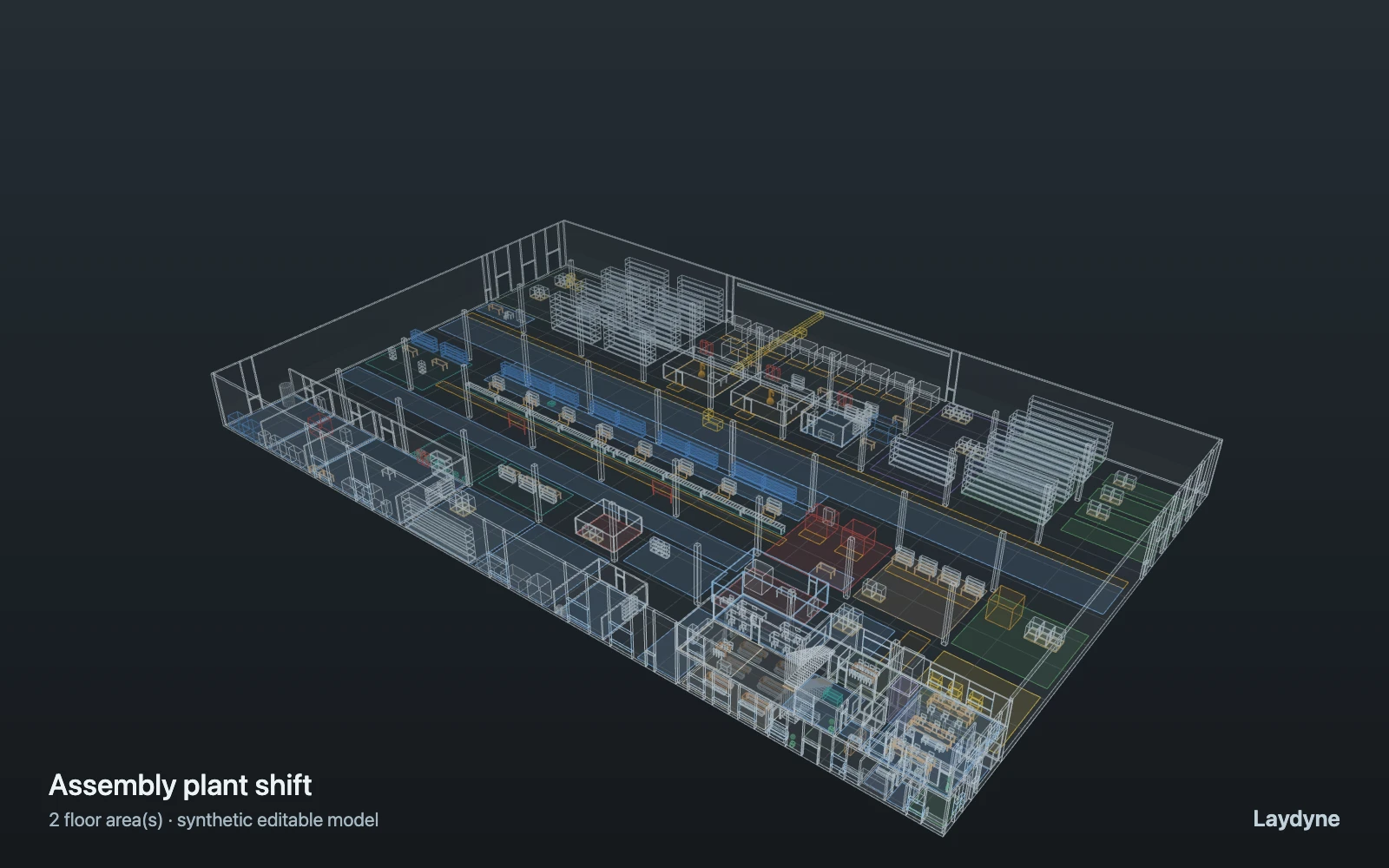
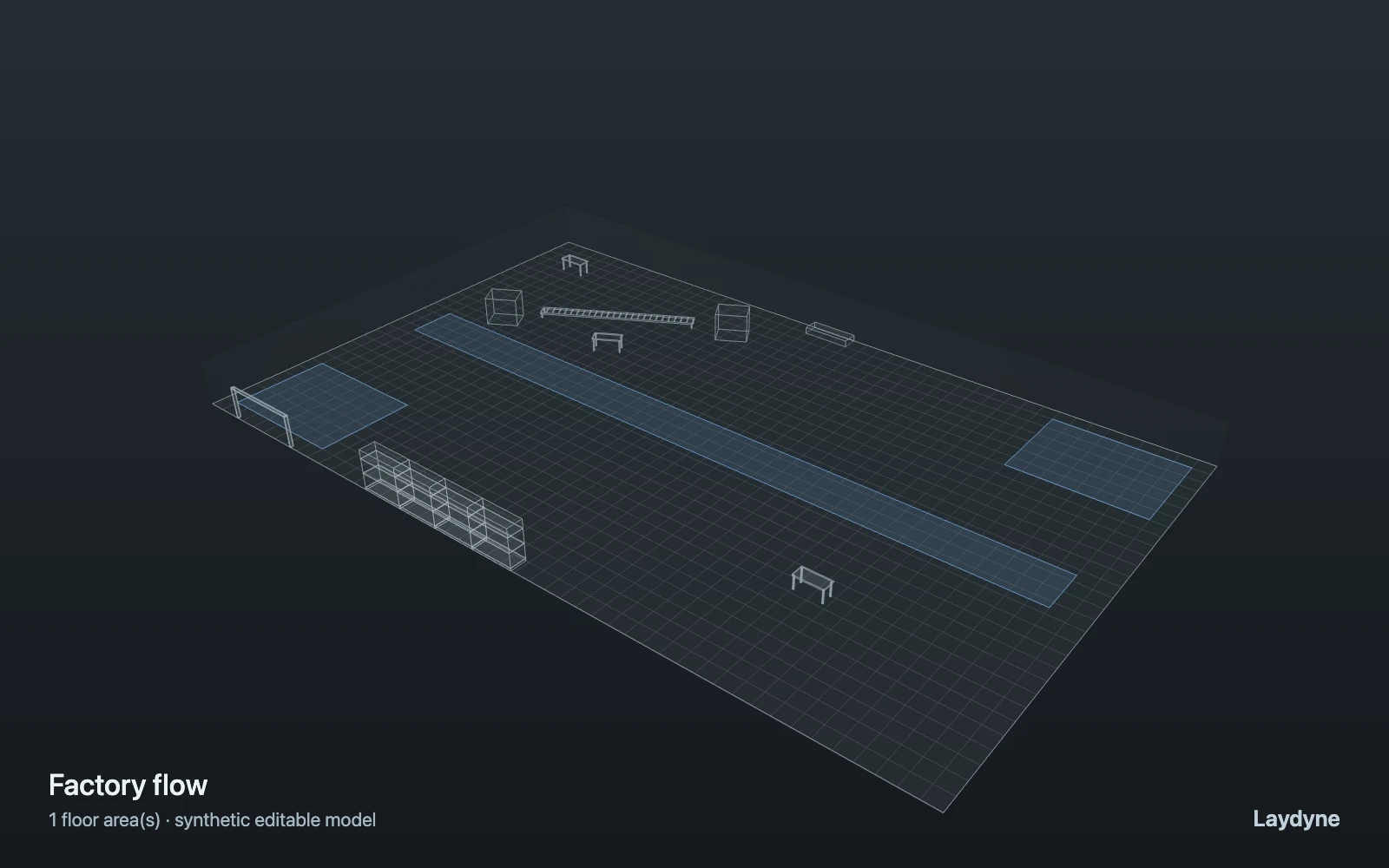
Add a robot. Or move the pickup?
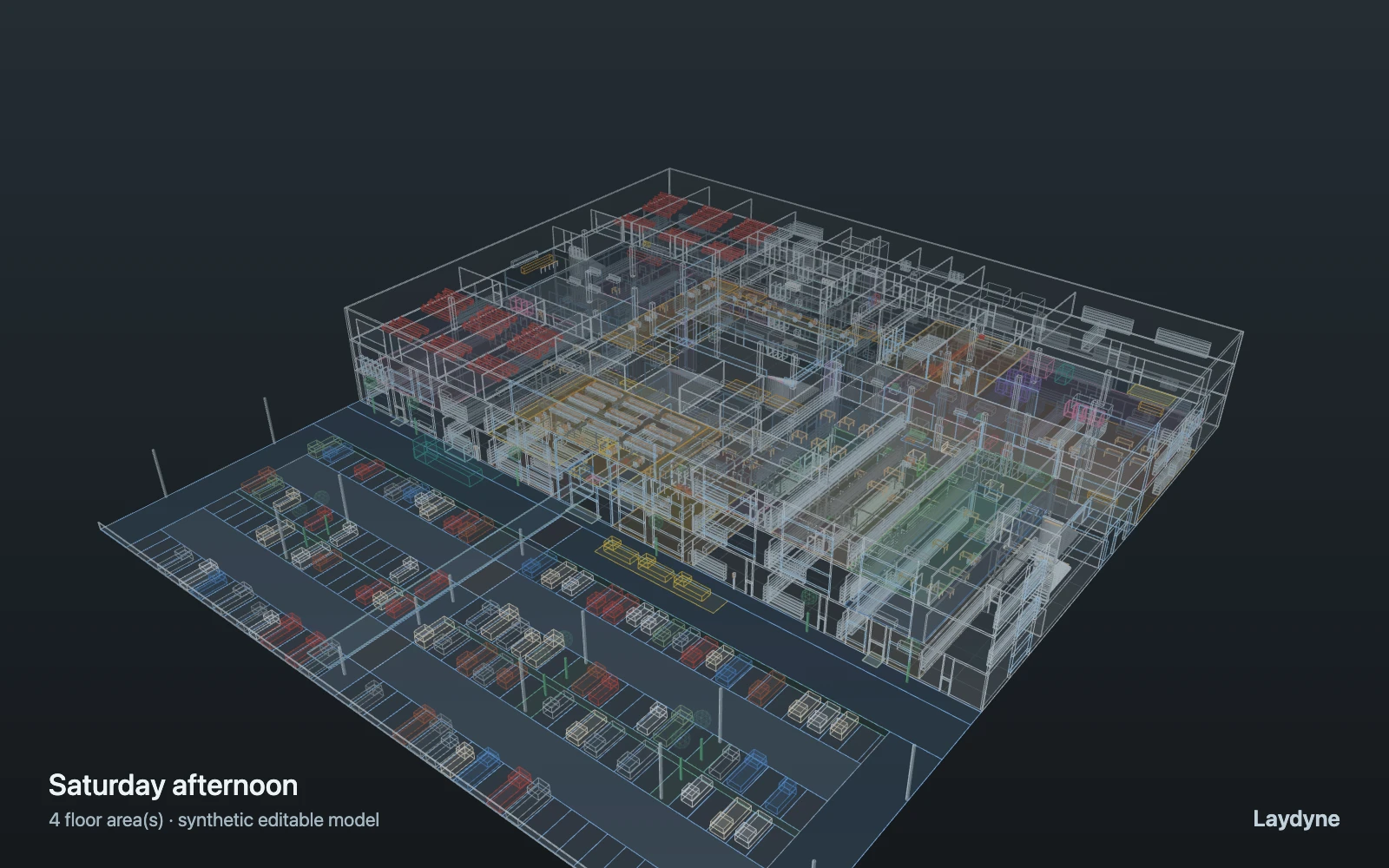
Follow loaded and empty AMRs in a factory supply study. Compare the current layout, a second robot and a closer pickup under the same 48 requests.
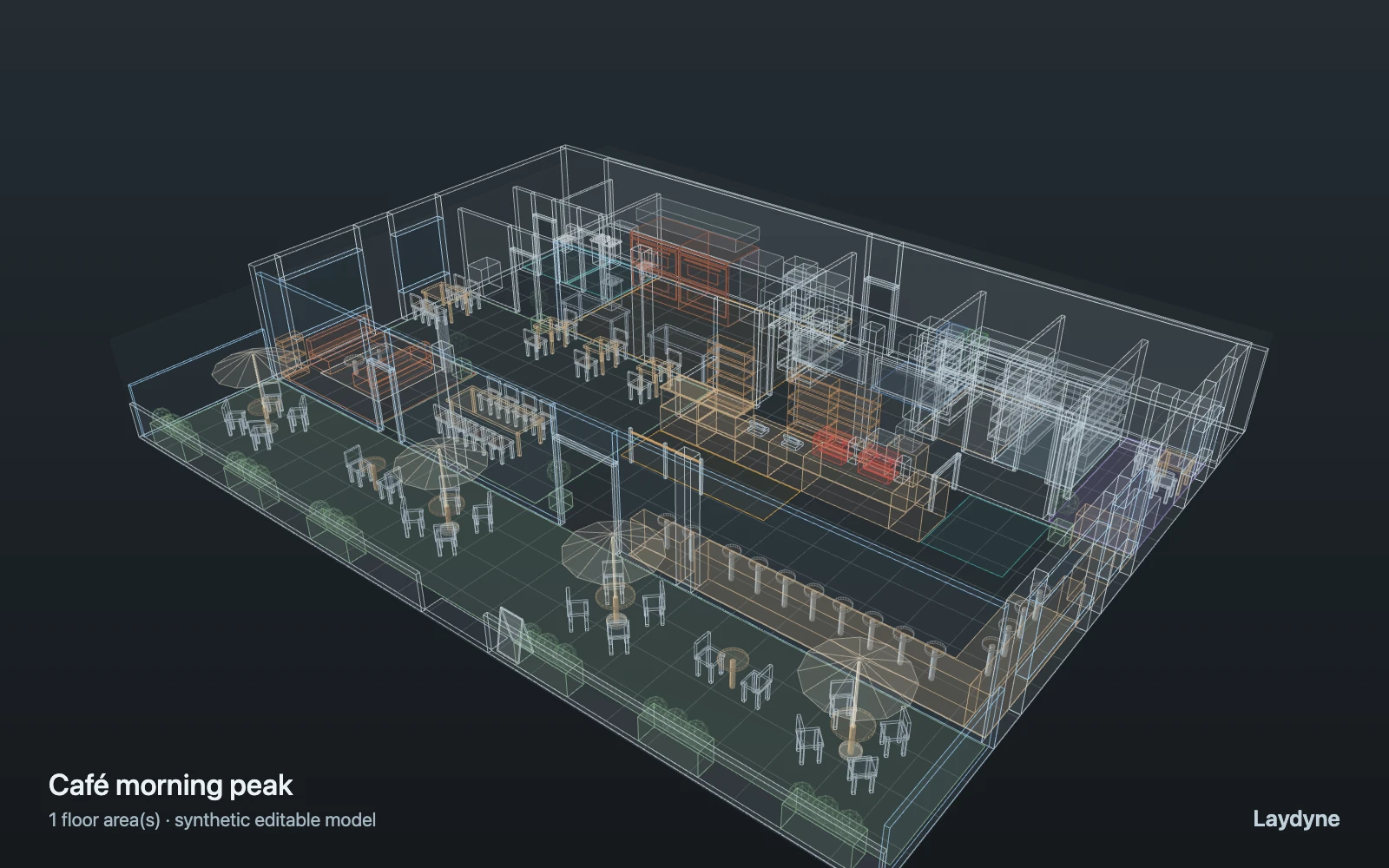
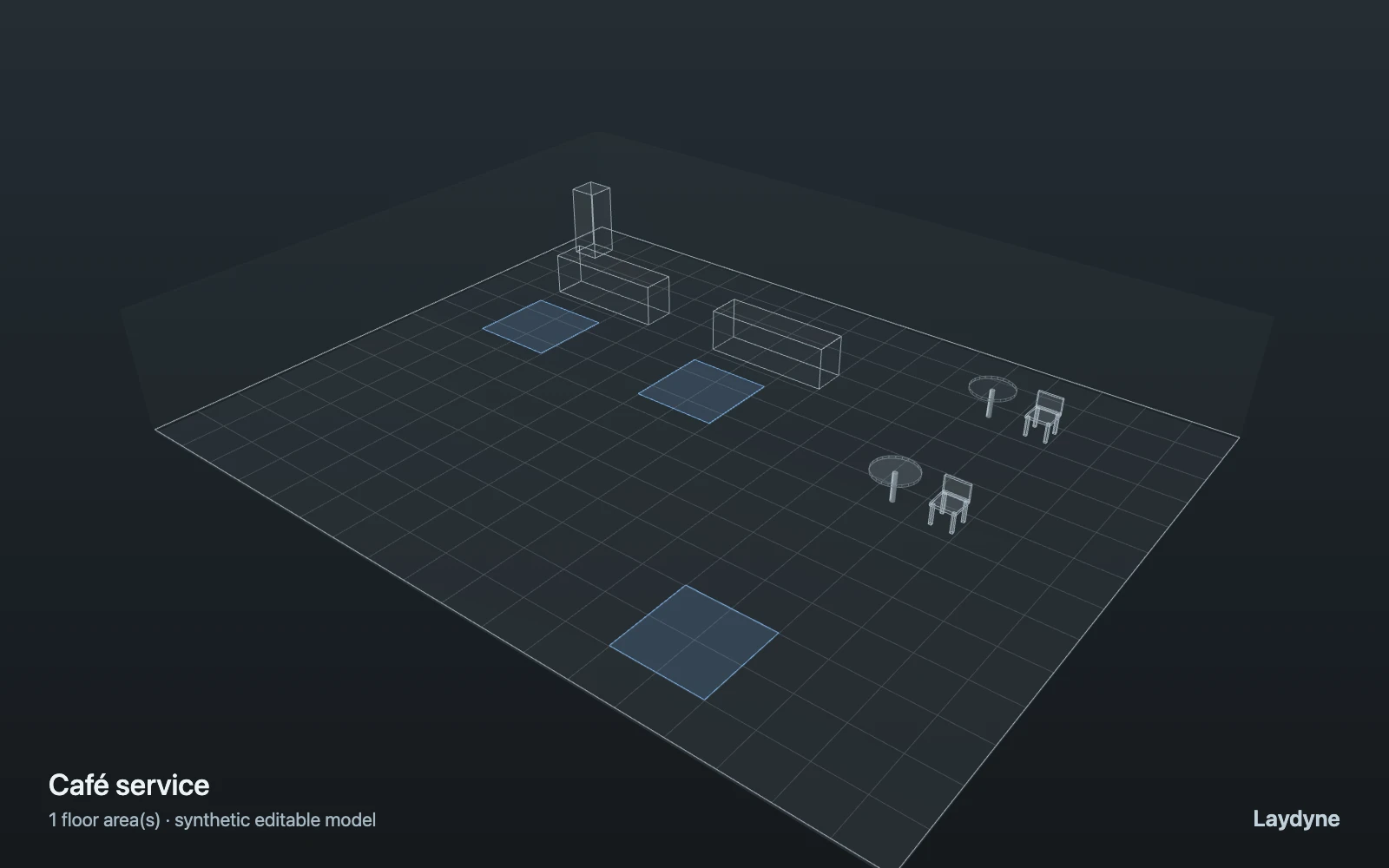
Is a second barista or a quicker order the better fix for the morning queue?
Street → order queue → free till → pickup while the drink is made → seat or leave; the baker shapes, bakes and restocks
Try changingWith the same 90 guests per hour, compare 1 and 2 baristas, then a 40 s and a 60 s order at the till. A third barista adds nothing while there are two machines.
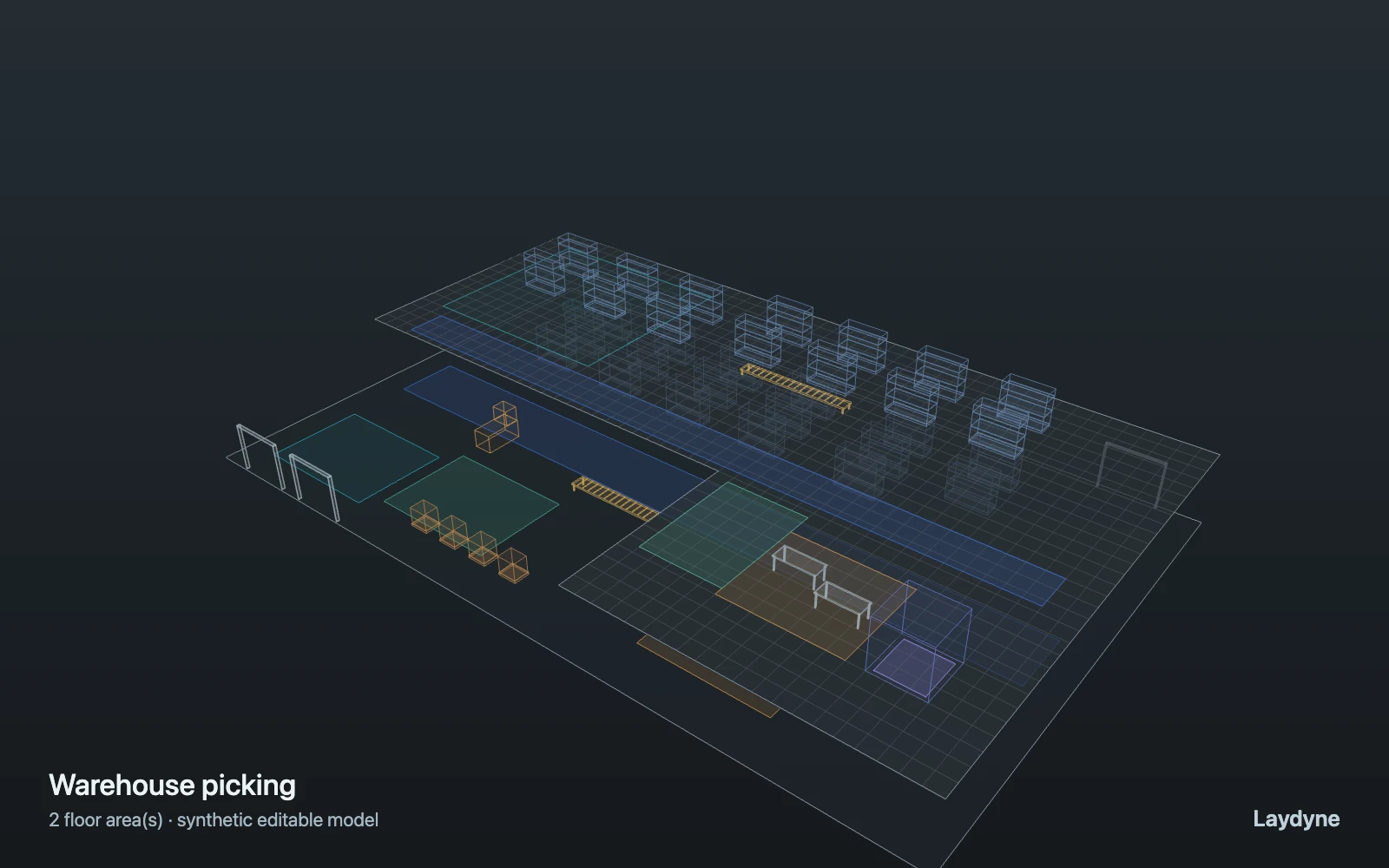
Warehouse operations managers and automation planners
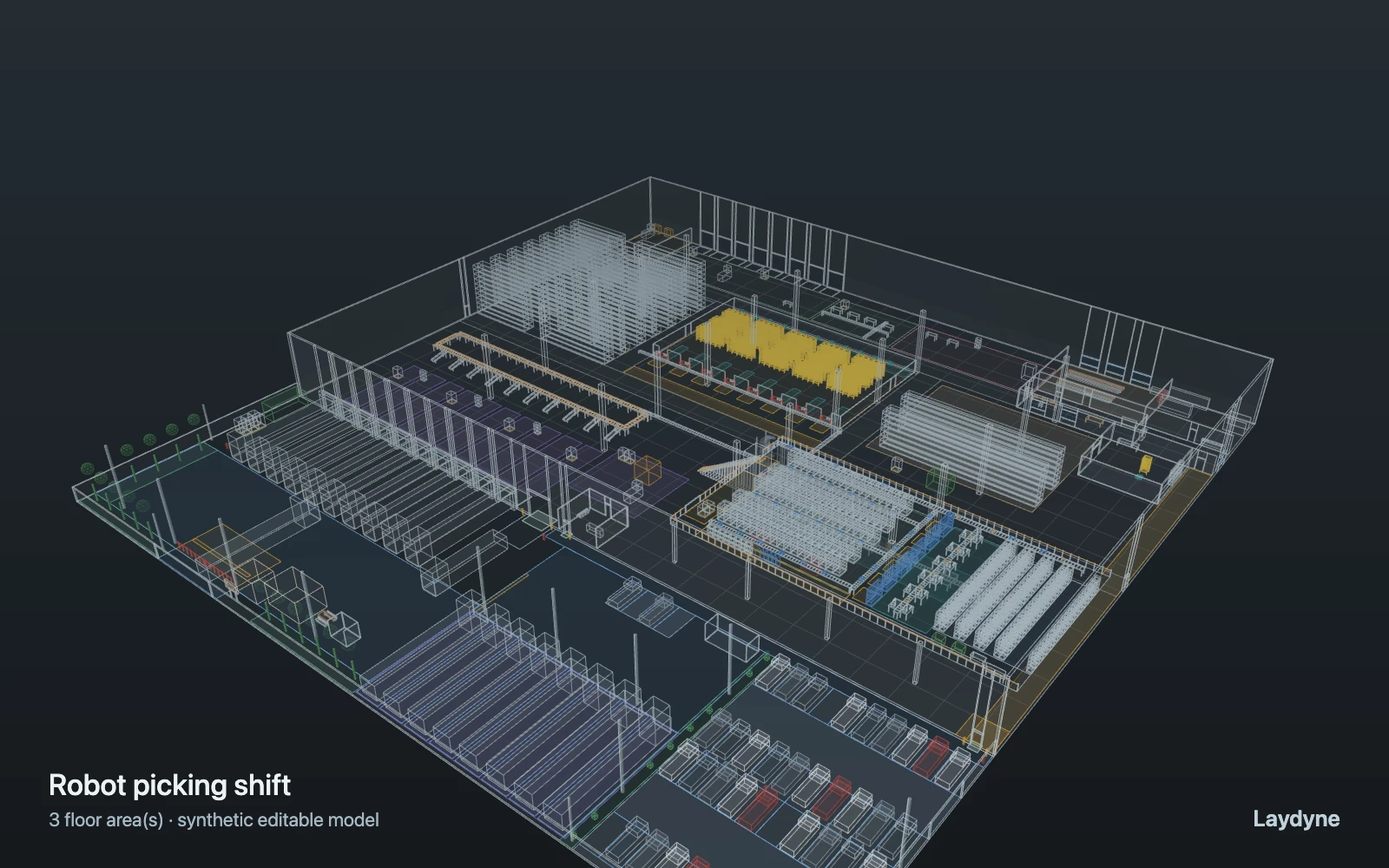
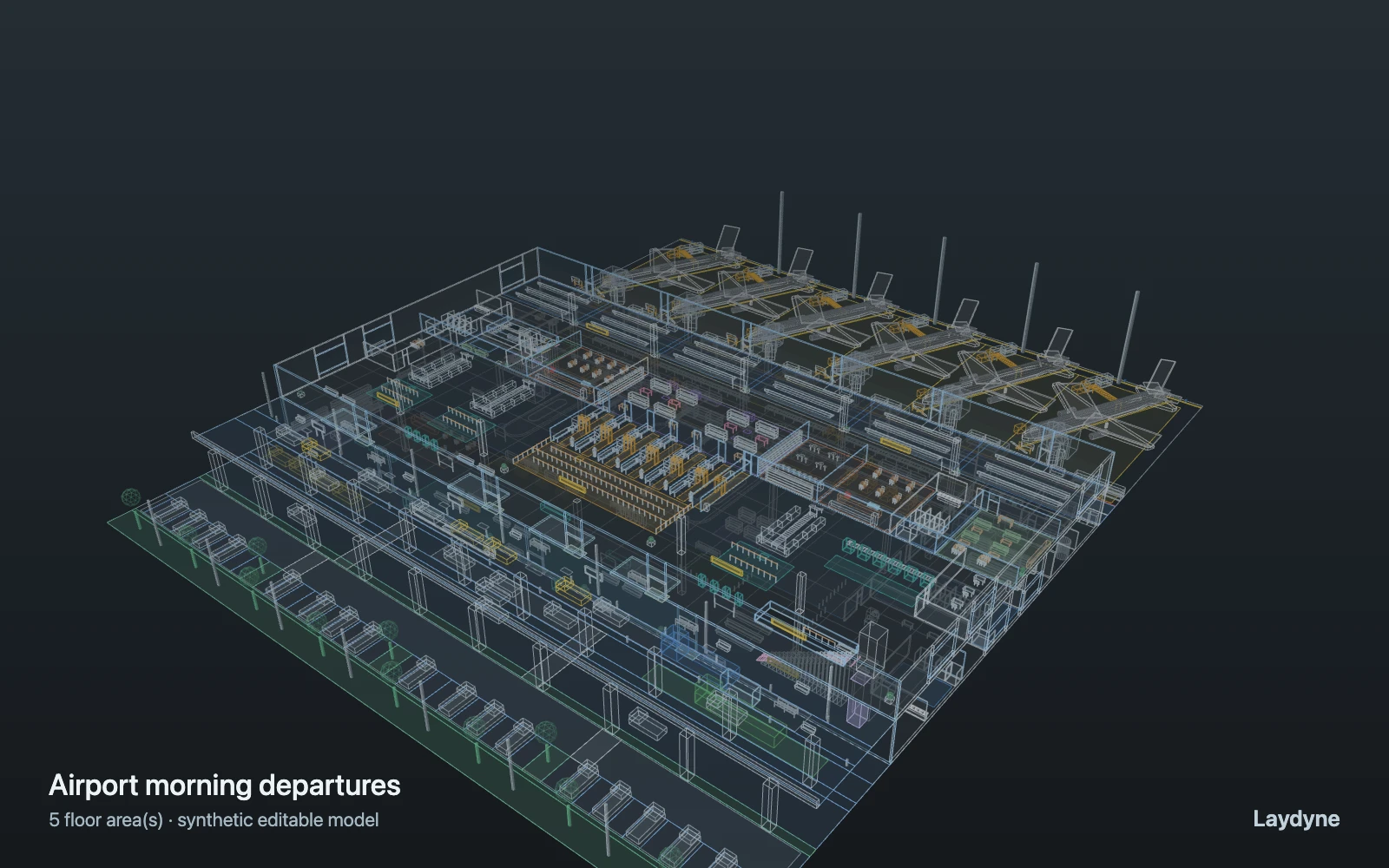
Will more robots raise throughput, or are the pick stations already the limit?
Order line → robot lifts a pod → station lane → pick → pod back to its place → conveyor → pack bench → sorter
Try changingWith the same orders, compare 16, 24 and 32 robots in service; then cut the pick time from 24 to 16 s, or the orders from 1,000 to 800 per hour.
Operations and development teams of multi-building shopping centres
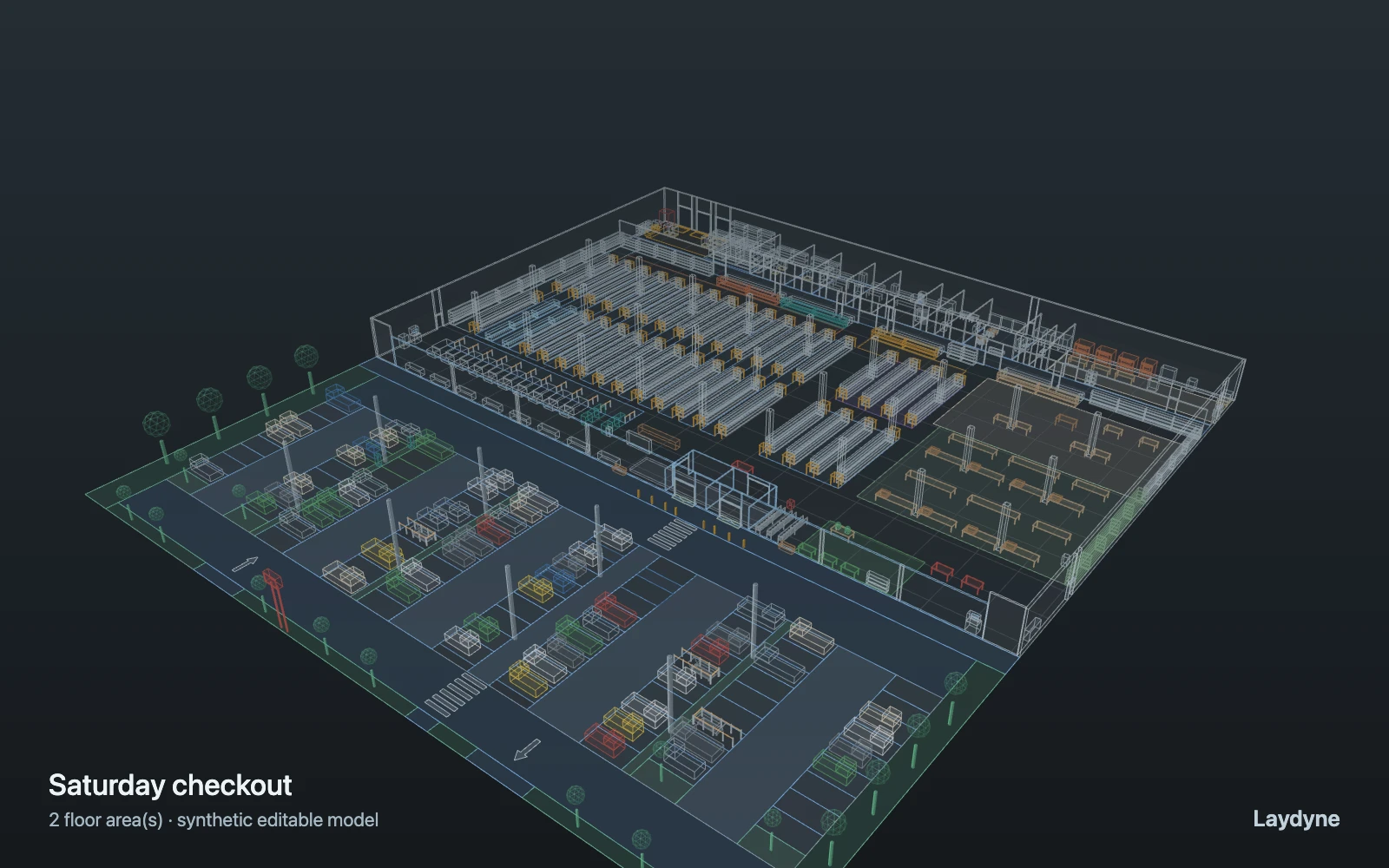
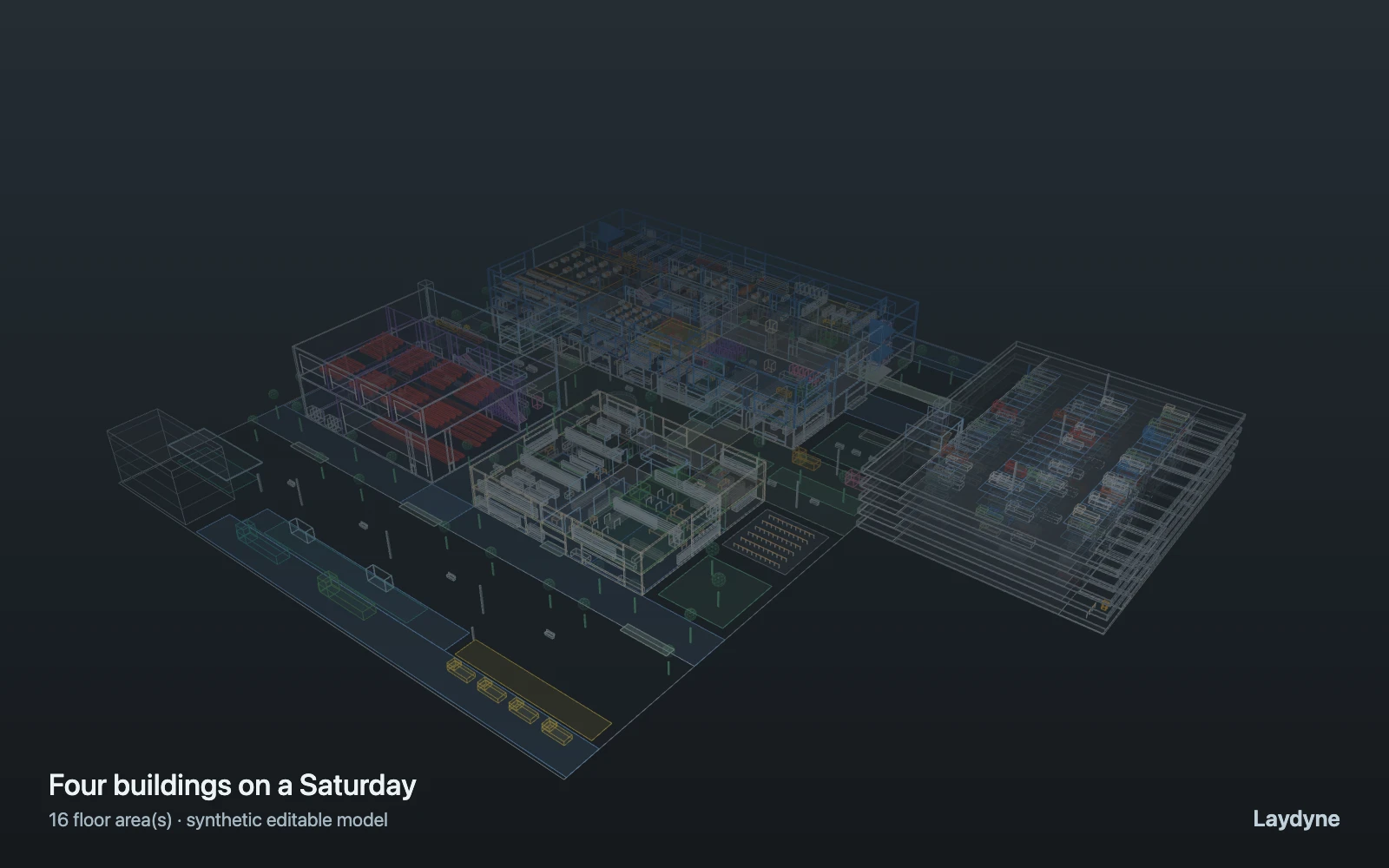
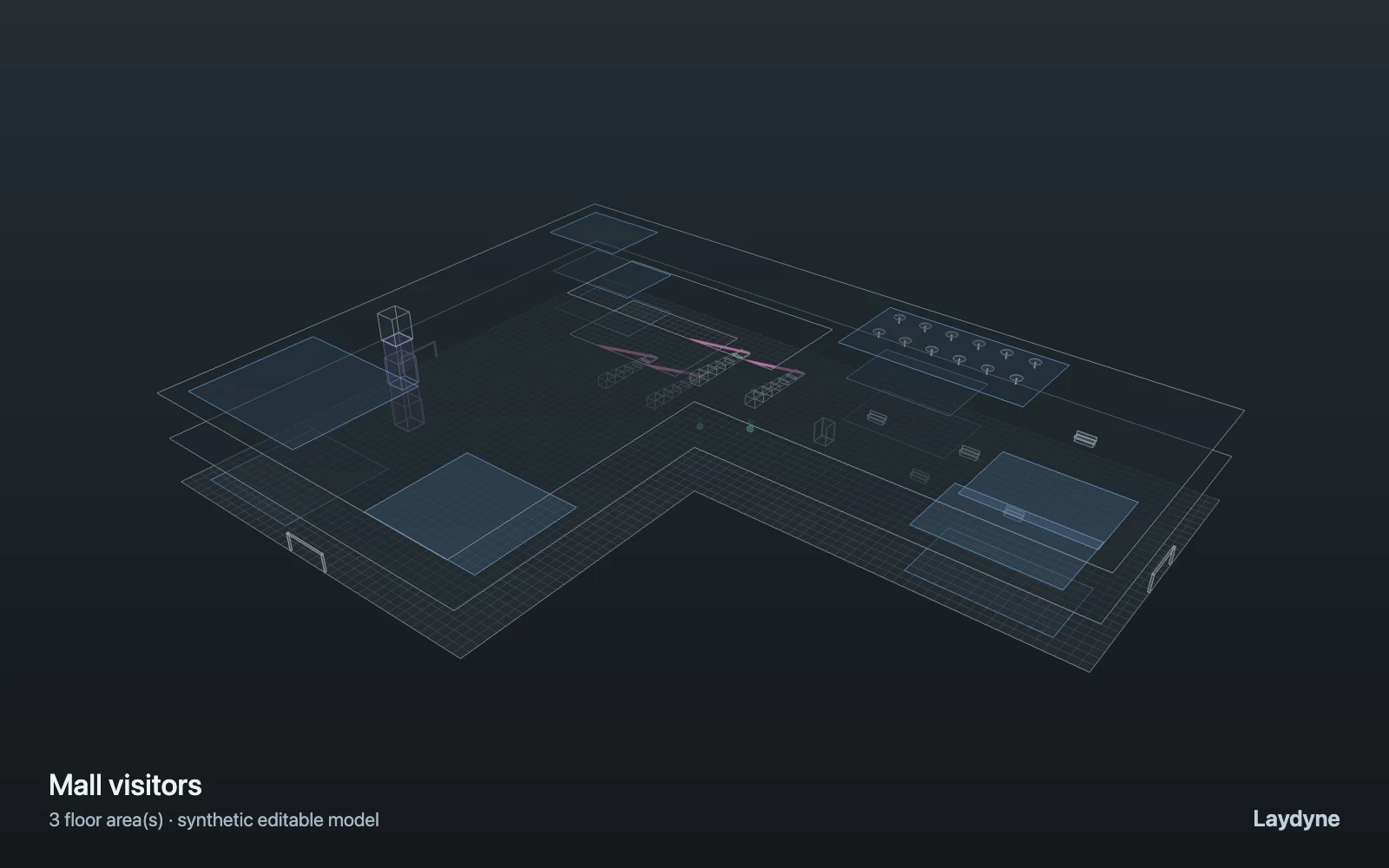
How much does a bridge from the main building’s top floor to the cinema take off the plaza and the escalators, and for which flows?
Car-park deck or station → shops in the main building or the annex (L2 bridge) → food court, or the cinema by the L3 bridge or the plaza → box office, concessions, seat; the film audience → food court, car or station
Try changingWith the same visitors and seed, set cinema trips by the L3 bridge to 0 and round by the plaza to 100: the site without the bridge (the connection stays; every cinema trip goes by the ground floor). Then try 50 and 50.
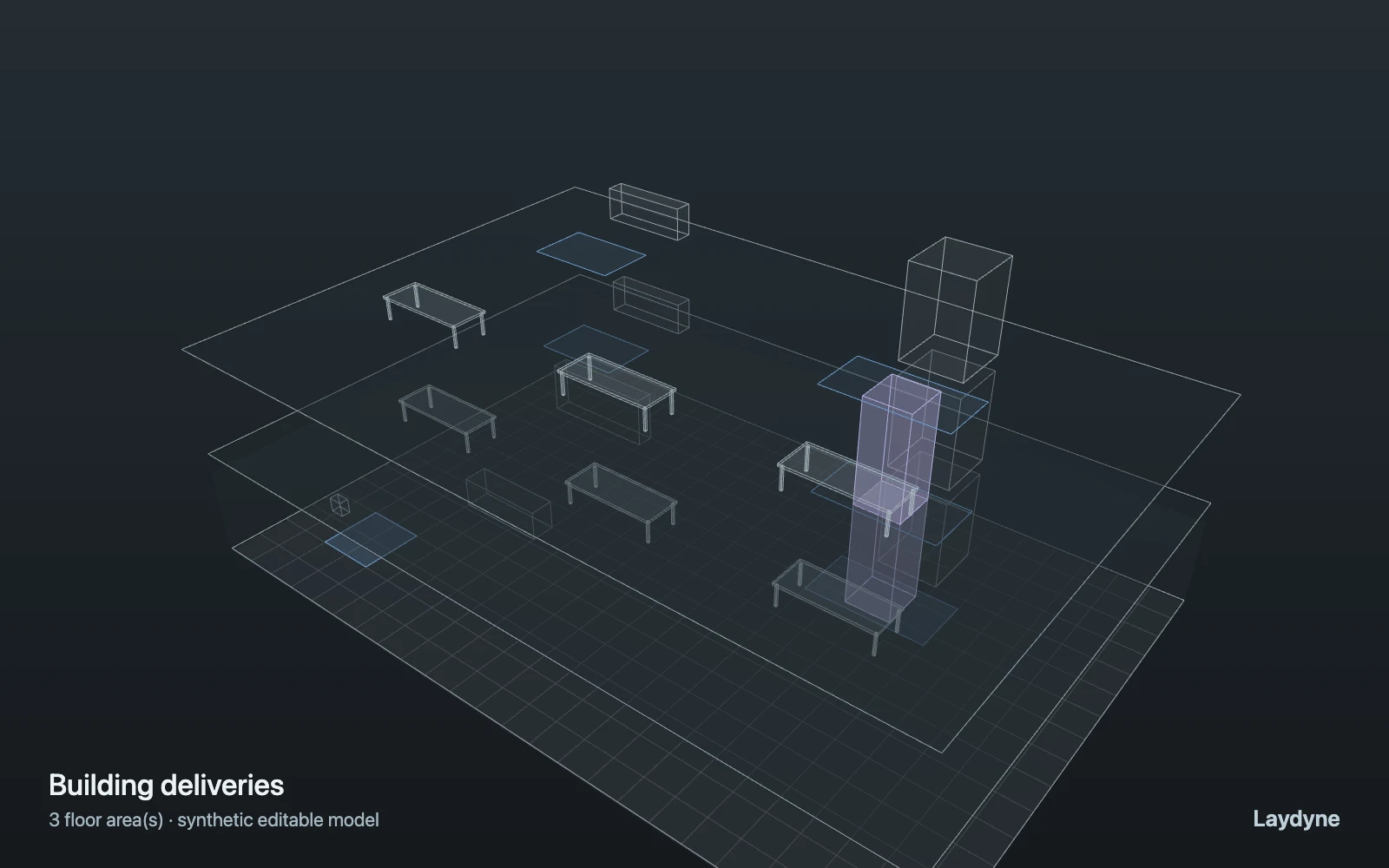
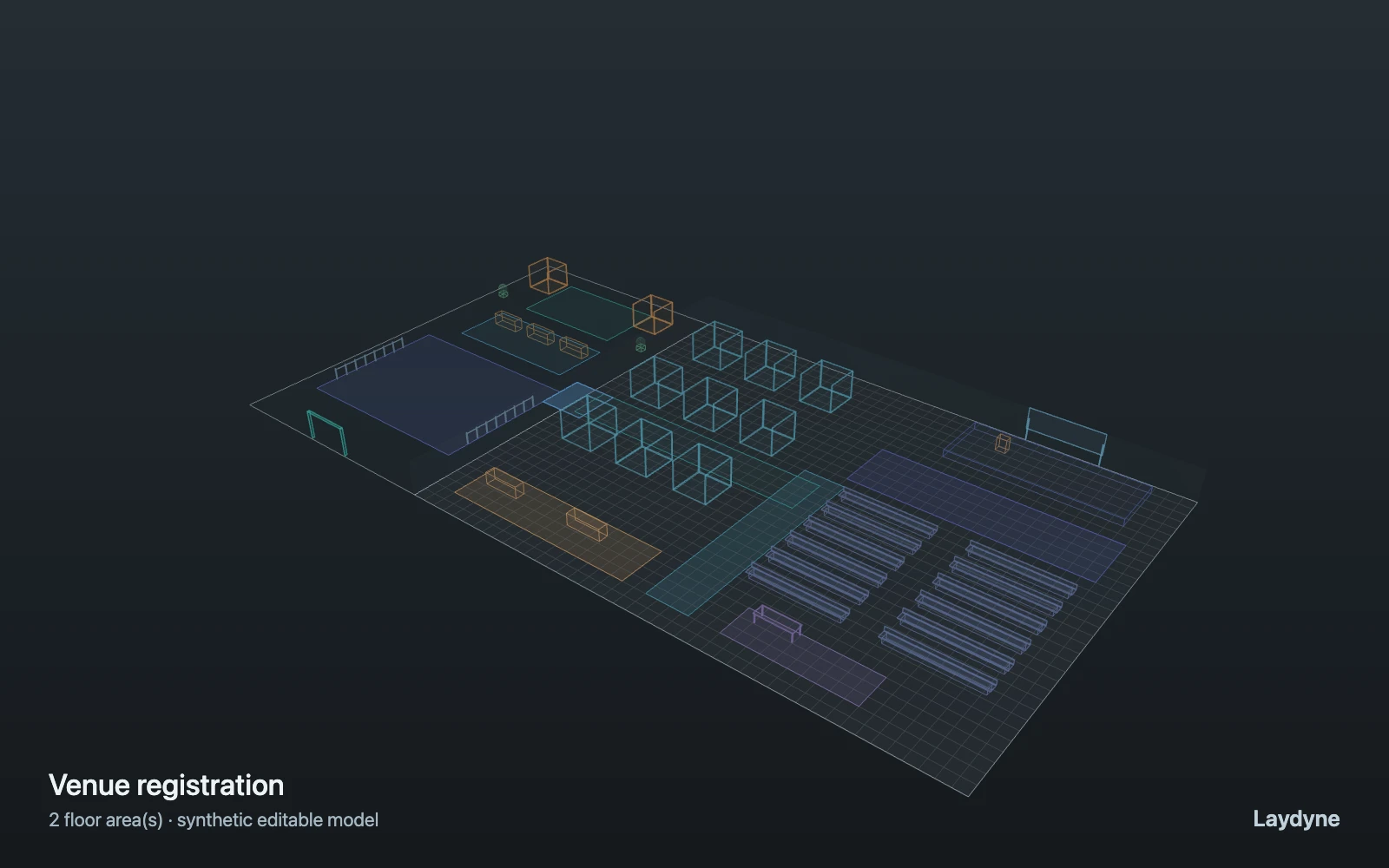
Housing managers, estate developers and management associations
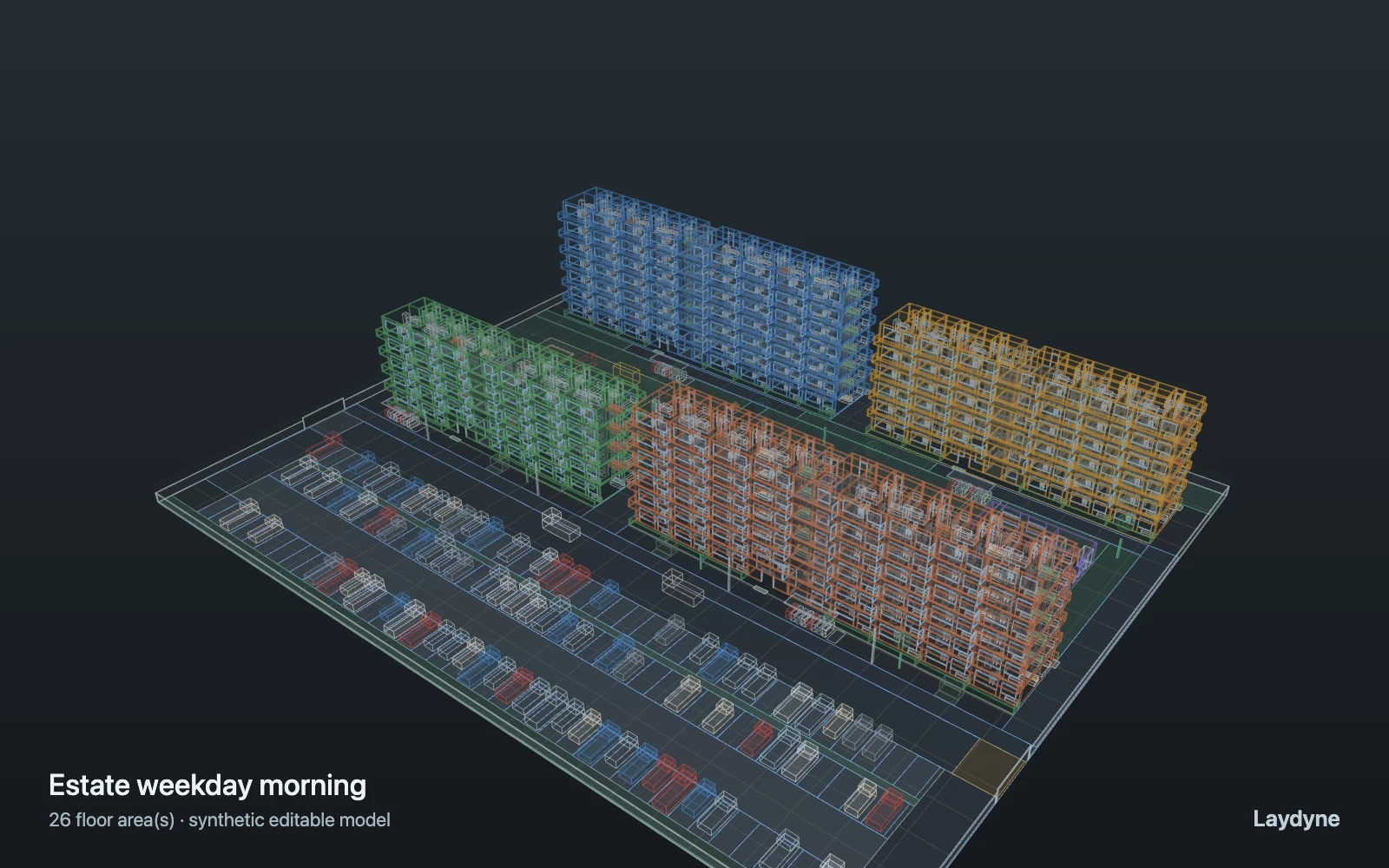
How do delivery boxes change the couriers’ time and lift use at the morning peak, and how long do residents wait for a lift?
Flat door → stairs (levels 1–2) or the lift hall → lift → lobby → refuse cage → on foot, by bicycle or by car. Couriers: van → delivery boxes, or lift → a flat’s door → back down
Try changingWith the same residents, put every parcel in the delivery boxes (boxes 100, doors 0) or take every parcel to the door (0 and 100); or raise the residents leaving per floor from 6 to 12.
One project, from the first sketch to a saved comparison.
All examples are synthetic. They demonstrate the calculation, not the performance of an operating site. Two numeric examples use supplied distances and capacities rather than spatial paths.