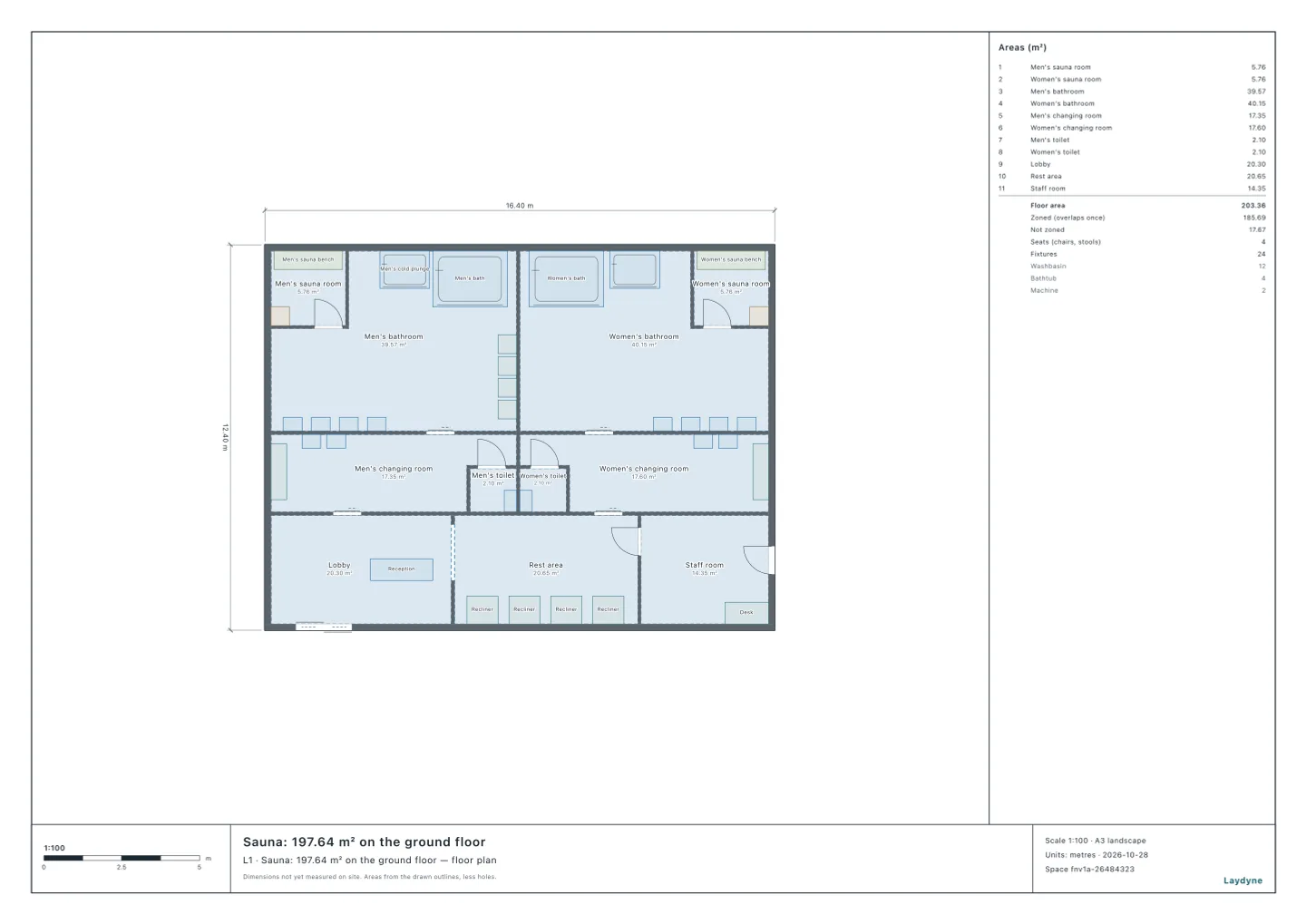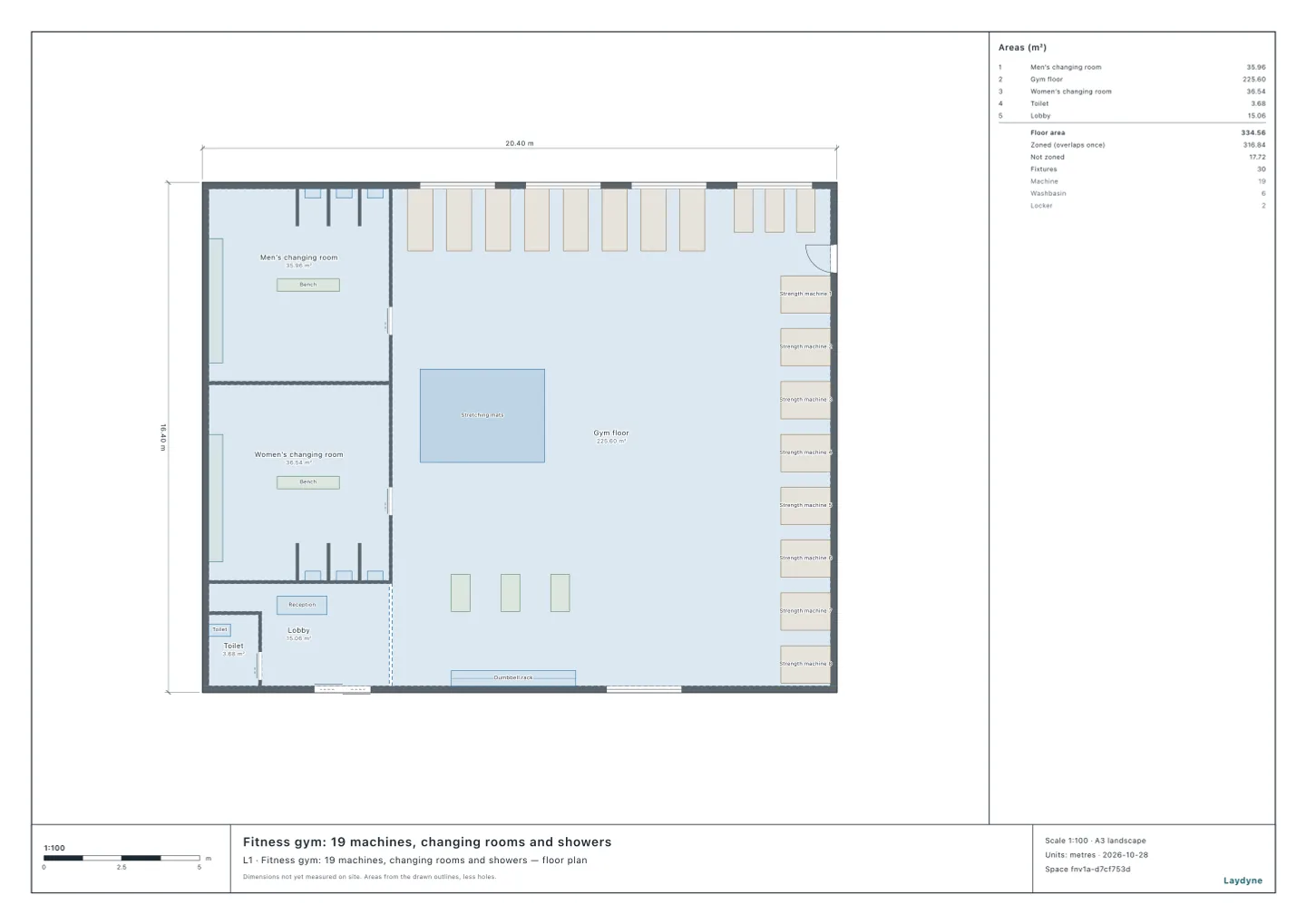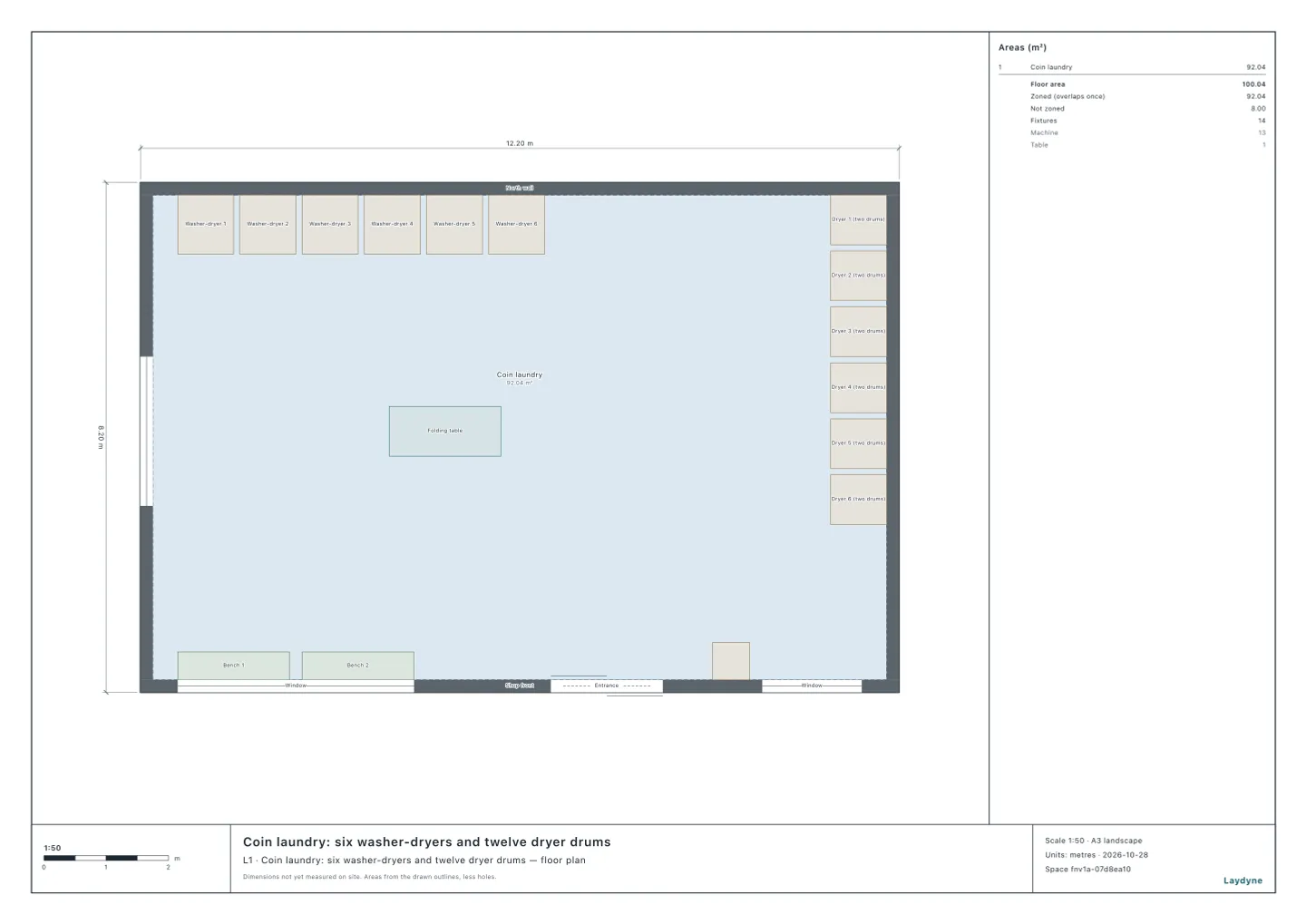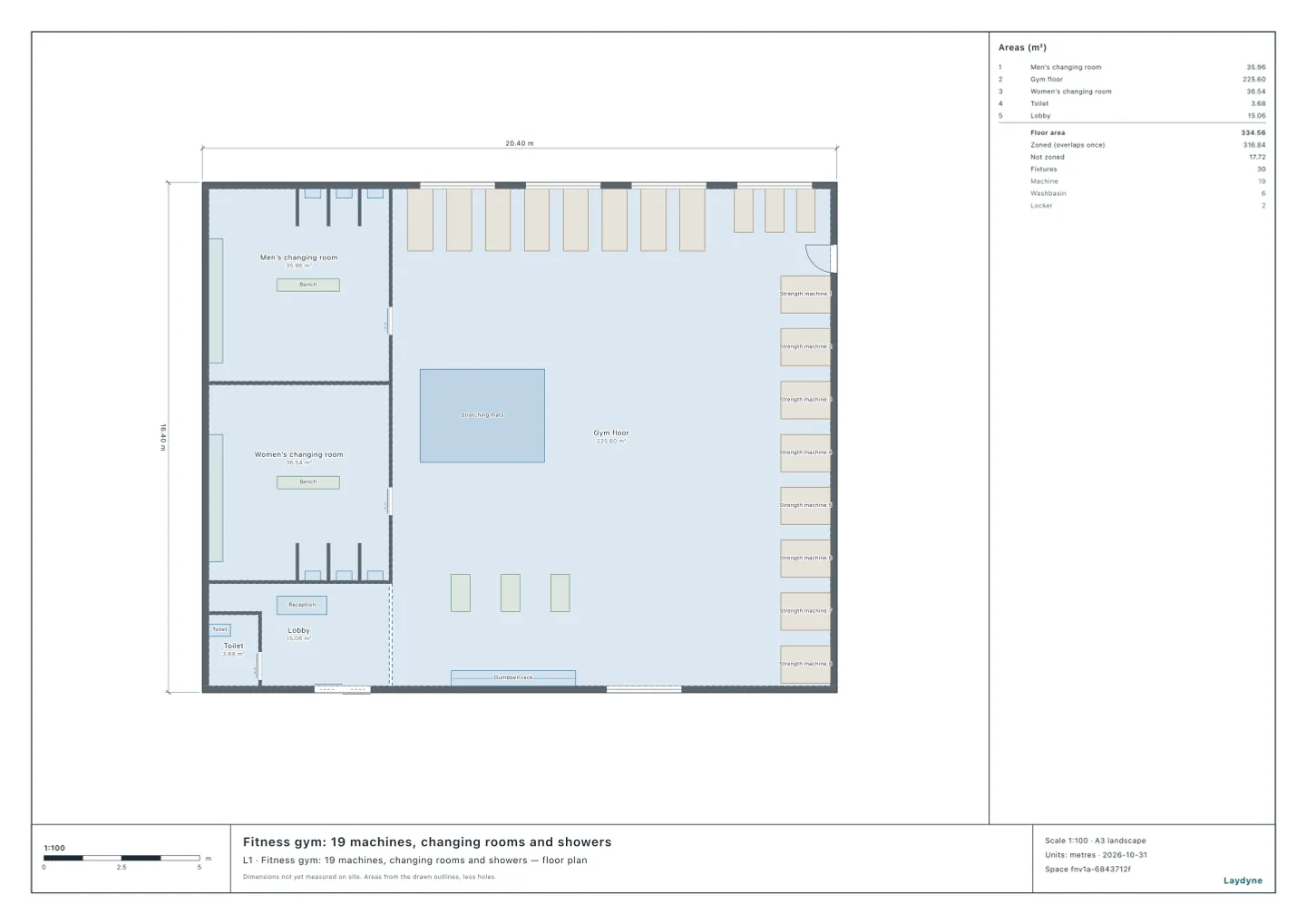
Whether shared machines or seats are enough depends not only on how many there are but on how long each use takes and how bunched up the arrivals are. Here are five examples an AI simulated in earlier articles: a coin laundry's washer-dryers, a gym's machines, an office's printers and microwaves, and a sauna's seats. A sauna round is one cycle of sauna, cold bath and rest. The AI used the tool it calls over MCP (sweep_process_parameters), and each figure is the mean of 20 runs.
1. By how many
| Example | Set-up | What is measured | Result |
|---|---|---|---|
| A coin laundry (a Saturday, 8 in the busiest hour, 60% only drying) | Six washer-dryers, twelve dryers | Washer-dryer customers who gave up and left (a day) | 2.7 people |
| A coin laundry (a Saturday, 8 in the busiest hour, 60% only drying) | Four washer-dryers, twelve dryers | Washer-dryer customers who gave up and left (a day) | 9.0 people |
| A coin laundry (a Saturday, 8 in the busiest hour, 60% only drying) | Six washer-dryers, six dryers | Washer-dryer customers who gave up and left (a day) | 2.7 people |
| A gym (24 at 19:00) | Nine cardio machines | Waiting for a cardio machine (mean) | 9.4 minutes |
| A gym (24 at 19:00) | Eleven cardio machines | Waiting for a cardio machine (mean) | 3.1 minutes |
| A gym (24 at 19:00) | Nine cardio machines, a 30-minute limit | Waiting for a cardio machine (mean) | 1.7 minutes |
| An office's printers (64 desks) | Each once in two hours, one printer | Waiting at the printer (mean) | 0.9 minutes |
| An office's printers (64 desks) | Each once an hour, one printer | Waiting at the printer (mean) | 13.3 minutes |
| An office's printers (64 desks) | Each once an hour, two printers | Waiting at the printer (mean) | 0.4 minutes |
| An office's microwaves (lunch for 64) | All at 12:00, one microwave | Waiting for a microwave (mean) | 20.4 minutes |
| An office's microwaves (lunch for 64) | All at 12:00, two microwaves | Waiting for a microwave (mean) | 9.0 minutes |
| An office's microwaves (lunch for 64) | Lunch in two halves 30 minutes apart, one microwave | Waiting for a microwave (mean) | 9.3 minutes |
| A sauna (a Saturday afternoon) | 9 an hour, four sauna seats | Waiting for the sauna room (per round) | 6.2 minutes |
| A sauna (a Saturday afternoon) | 9 an hour, six sauna seats | Waiting for the sauna room (per round) | 0.6 minutes |
| A sauna (a Saturday afternoon) | 12 an hour, six sauna seats | Waiting for the sauna room (per round) | 2.7 minutes |
2. What they show
- One kind of machine runs short. With four washer-dryers, the customers who leave rise from 2.7 to 9.0; with six dryers they stay at 2.7.
- Change how they are used before adding more. With a 30-minute limit, the wait at the gym's nine cardio machines is 1.7 minutes, shorter than the 3.1 with eleven machines. With lunch in two halves 30 minutes apart, the wait at the office's one microwave is 9.3 minutes, about the same as the 9.0 with two microwaves.
- How often people use them decides. If each person prints once in two hours, the wait at one printer is 0.9 minutes; once an hour, it is 13.3 minutes, and with two printers 0.4. At the sauna with 9 guests an hour, the wait is 6.2 minutes with four seats and 0.6 with six.
3. The articles
- How many machines for a coin laundry?
- Gym crowding with your AI: how many treadmills?
- How many printers for the office?
- How many microwaves for the office?
- Sauna crowding with your AI: how many seats in the sauna room?
4. How to ask an AI
In this office (as drawn, 64 desks), with 40% bringing a lunch to heat, compare the wait at one and two microwaves, and with lunch half and half 30 minutes apart, 20 runs each.
5. What this does not cover
- How many people come and when, and how long each use takes, are each article's assumptions. Replace them with your own shop's or office's records.