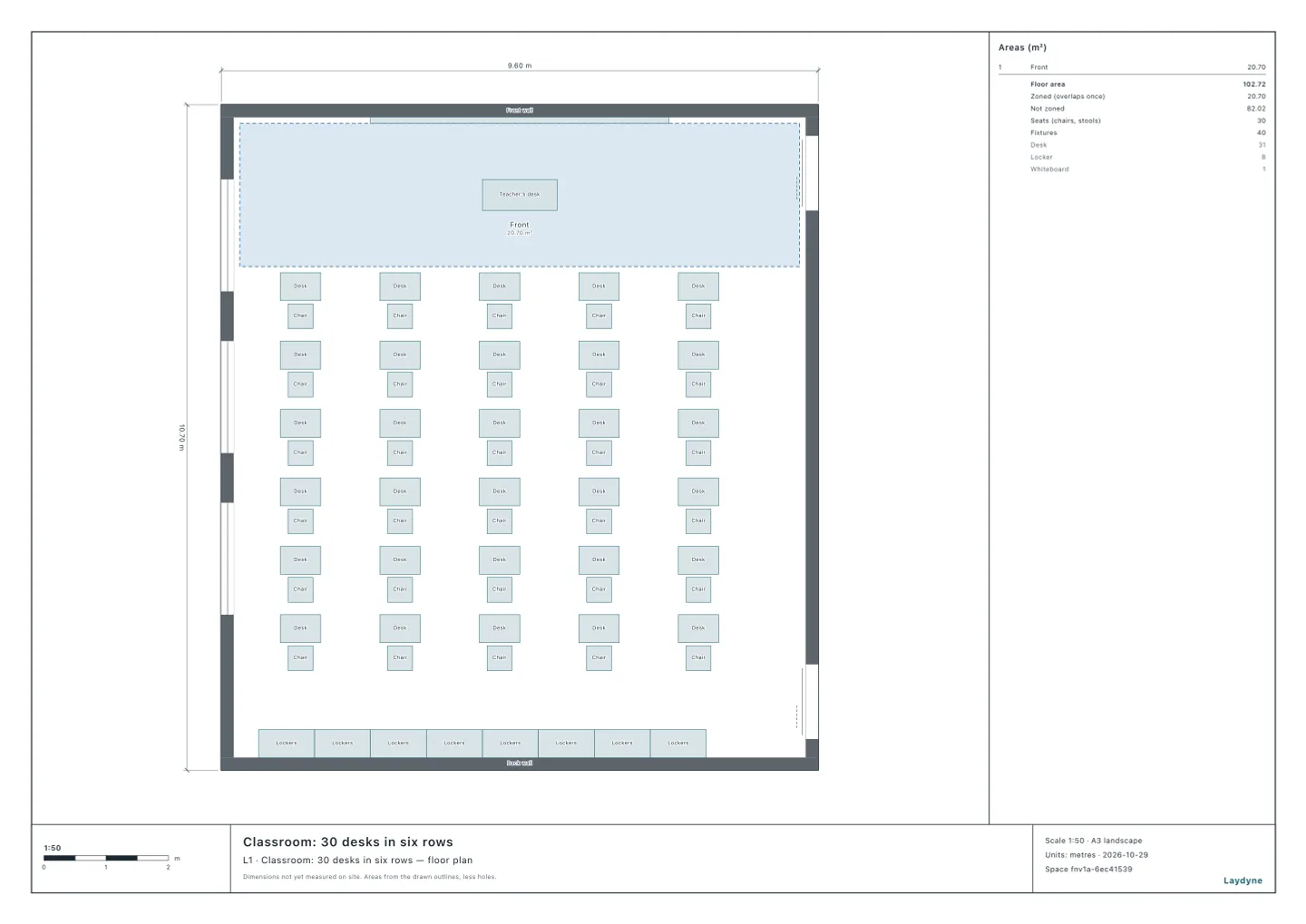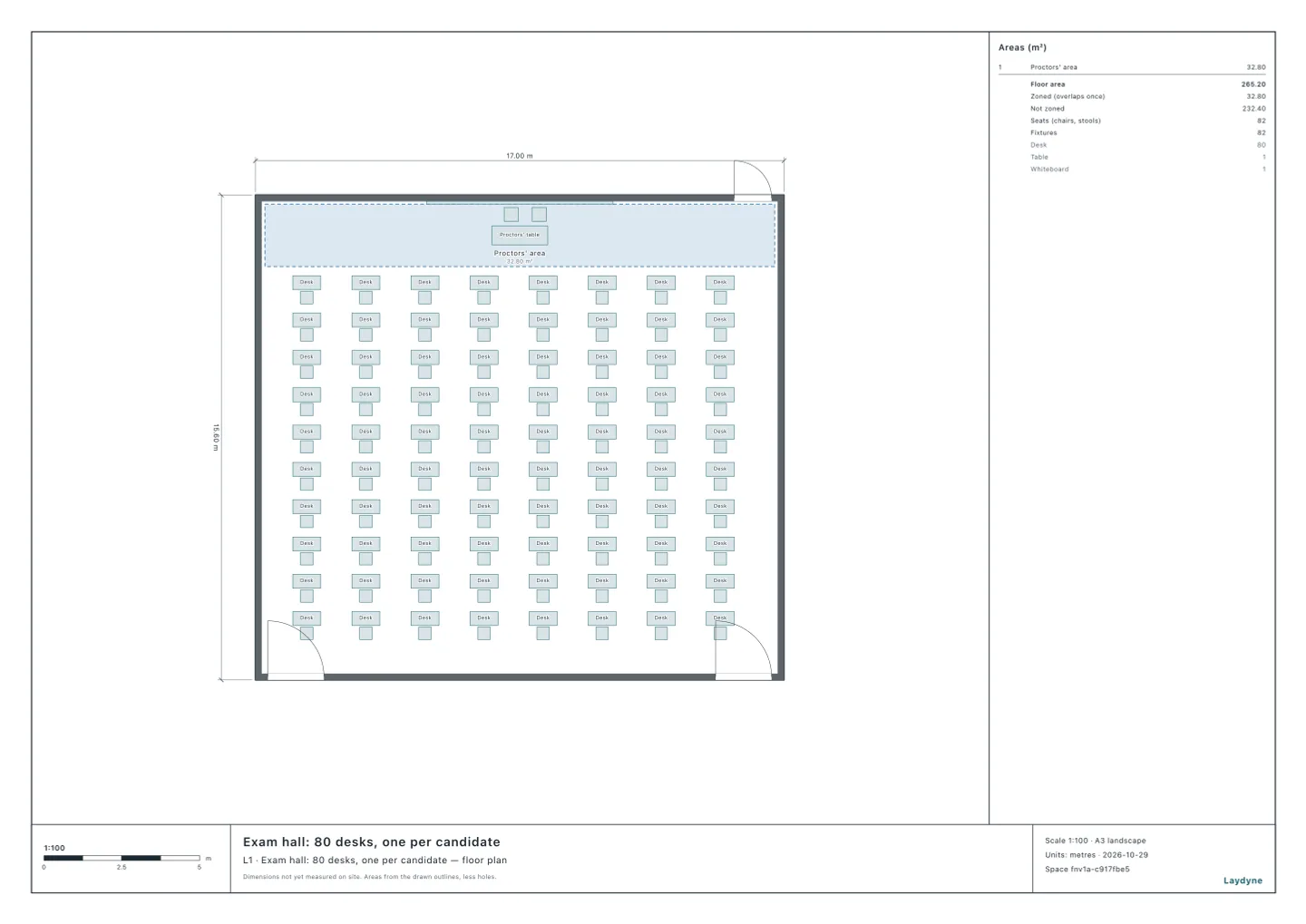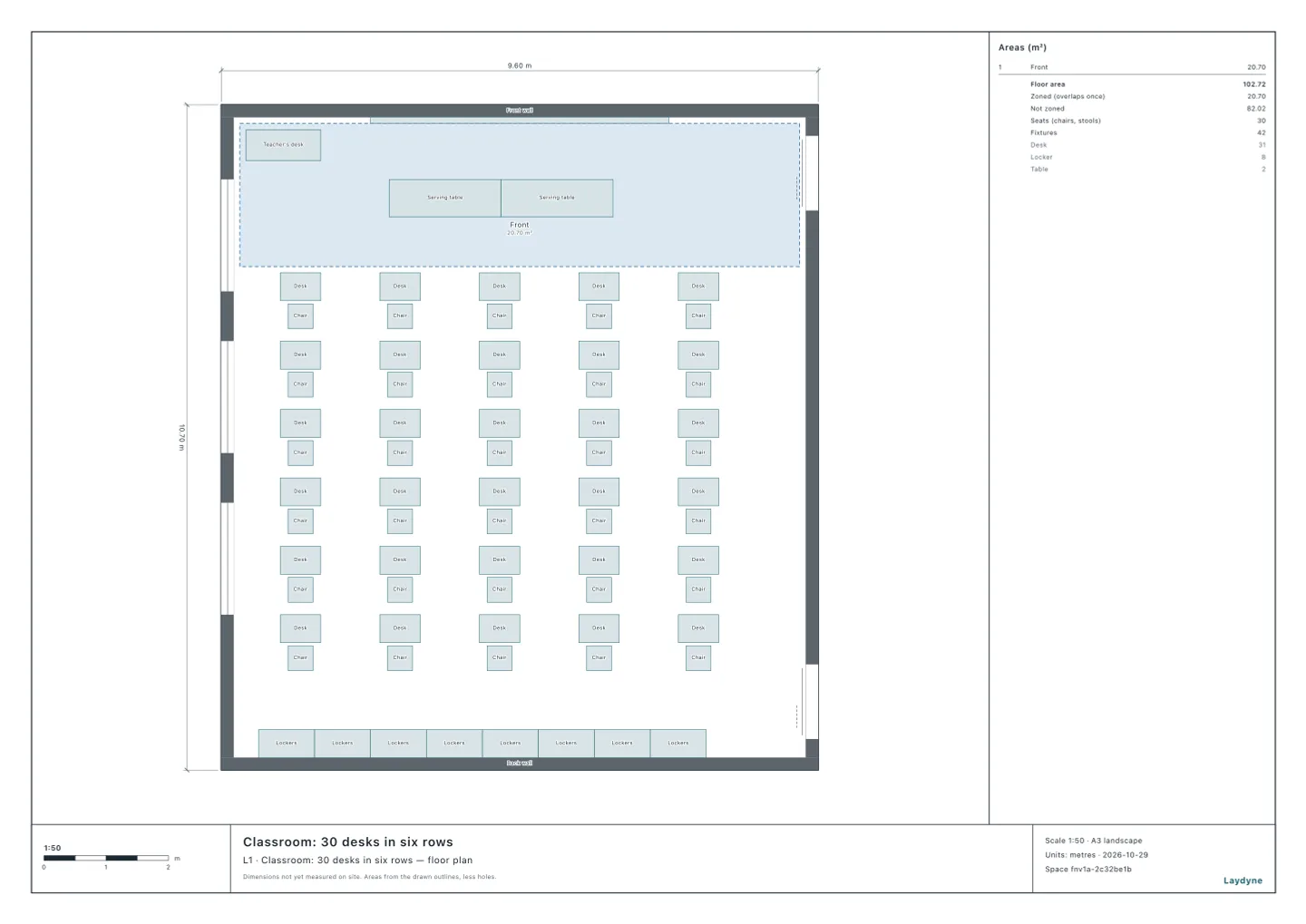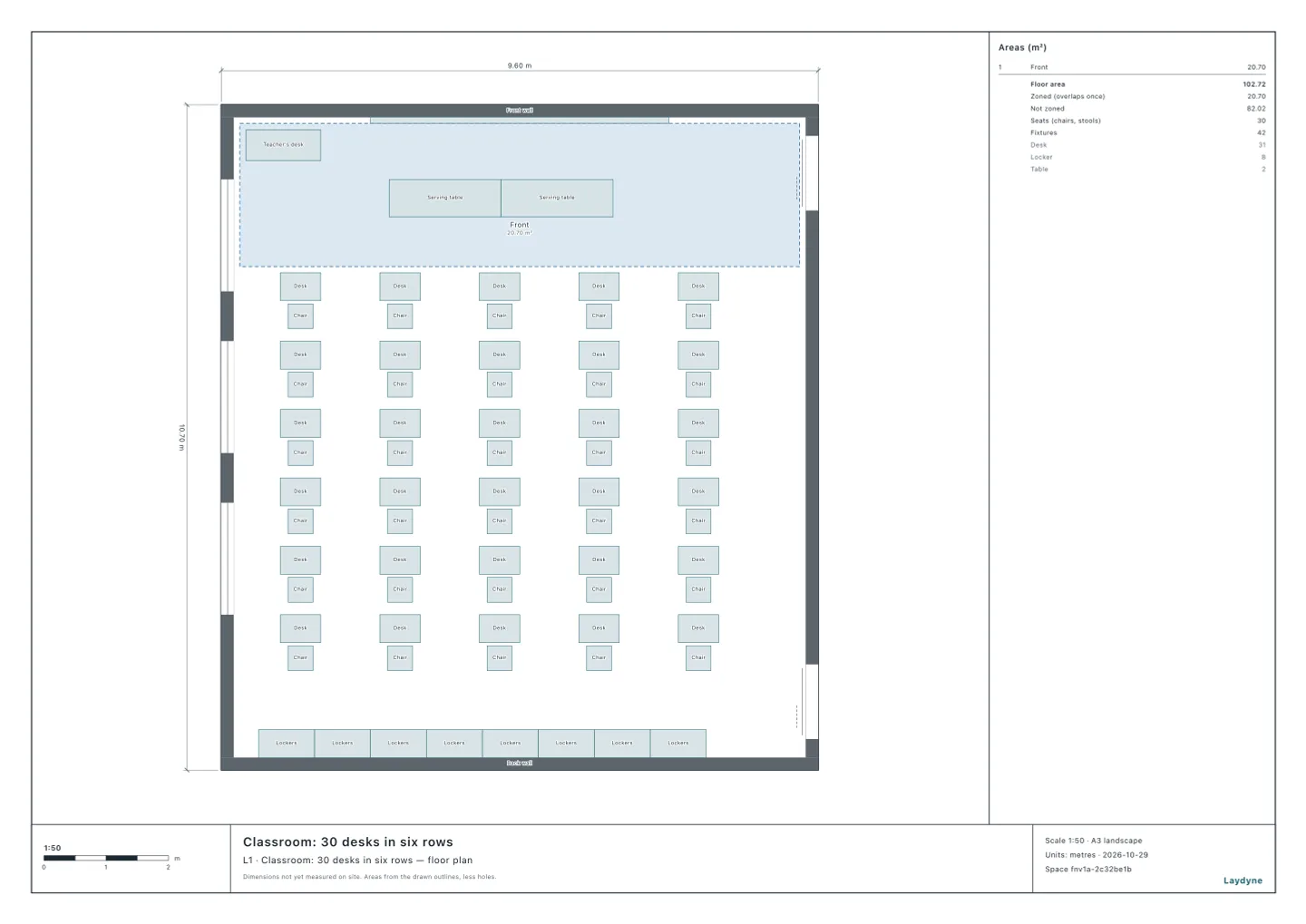
School and nursery waits depend not only on the staff but on how people queue (all at once or row by row), where children are taken in, when people arrive and how long they may stay. Here are five examples an AI simulated in earlier articles: school lunch, a kindergarten’s pick-up, a day nursery’s morning drop-off, a study room and an exam’s check-in. The AI used the tool it calls over MCP (sweep_process_parameters); each figure is the mean of 20 runs.
1. By the set-up
| Example | Set-up | What is measured | Result |
|---|---|---|---|
| School lunch (a class of 30) | One pupil serving soup, all queuing at once | Queue wait (mean) | 6.6 min |
| School lunch (a class of 30) | Two pupils serving soup, all queuing at once | Queue wait (mean) | 5.8 min |
| School lunch (a class of 30) | Two pupils serving soup, called row by row | Queue wait (mean) | 0.3 min |
| A kindergarten's pick-up (75) | One teacher per class hands over, parents arrive from 15 minutes before | Wait (mean) | 11.1 min |
| A kindergarten's pick-up (75) | Two teachers per class hand over, parents arrive from 15 minutes before | Wait (mean) | 8.2 min |
| A kindergarten's pick-up (75) | One teacher per class hands over, parents arrive from 5 minutes before | Wait (mean) | 5.6 min |
| A day nursery's morning (80 places) | Each room's teacher takes the children in | A parent of a child under two, entrance to leaving | 5.9 min |
| A day nursery's morning (80 places) | One person takes them in at the entrance | A parent of a child under two, entrance to leaving | 28.2 min |
| A day nursery's morning (80 places) | Three people take them in at the entrance | A parent of a child under two, entrance to leaving | 5.1 min |
| A cram school's study room (60 coming) | 30 seats, up to three hours | Students who left without a seat | 6.5 students |
| A cram school's study room (60 coming) | 30 seats, up to two hours | Students who left without a seat | 2.2 students |
| A cram school's study room (60 coming) | 24 seats, up to three hours | Students who left without a seat | 12.9 students |
| An exam's check-in (80) | A 45-second check, one person at each door | From the door to the desk | 2.0 min |
| An exam's check-in (80) | A 45-second check, two people at each door | From the door to the desk | 0.9 min |
| An exam's check-in (80) | A 60-second check, one person at each door | From the door to the desk | 4.0 min |
2. What they show
- Change how people queue and when they arrive. Calling a class of 30 row by row, with two pupils serving soup, cuts the school lunch queue wait from 5.8 minutes to 0.3 minutes. At the kindergarten’s pick-up, two teachers bring the wait down to 8.2 minutes, but one teacher with parents arriving from 5 minutes before brings it down to 5.6 minutes.
- Gather the children in one place only with more staff. At the day nursery’s entrance, one person taking the children in keeps a parent there 28.2 minutes; three people make it 5.1 minutes, shorter than taking the children in in each room (5.9 minutes).
- Set a time limit. A two-hour limit in the study room cuts the students who leave without a seat from 6.5 to 2.2. With 24 seats, 12.9 students leave.
- A little longer each, a lot longer to wait. At the exam’s check-in, a 60-second check instead of a 45-second one takes the time with one person at each door from 2.0 minutes to 4.0 minutes.
3. The articles
- How can a class of 30 serve school lunch sooner?
- Is your kindergarten's entrance crowded at pick-up?
- How many staff to take the children in at a day nursery?
- How many seats does a study room need?
- How many staff to check candidates in?
4. How to ask an AI
In this classroom (as drawn, 30 pupils), compare school lunch with one and two pupils serving soup, with everyone queuing at once and called row by row, and give the queue wait over 20 runs each.
5. What this does not cover
- When people arrive and how many, and the times to serve, hand over and check in, are each article's assumptions. Put your own school's or nursery's records in their place.