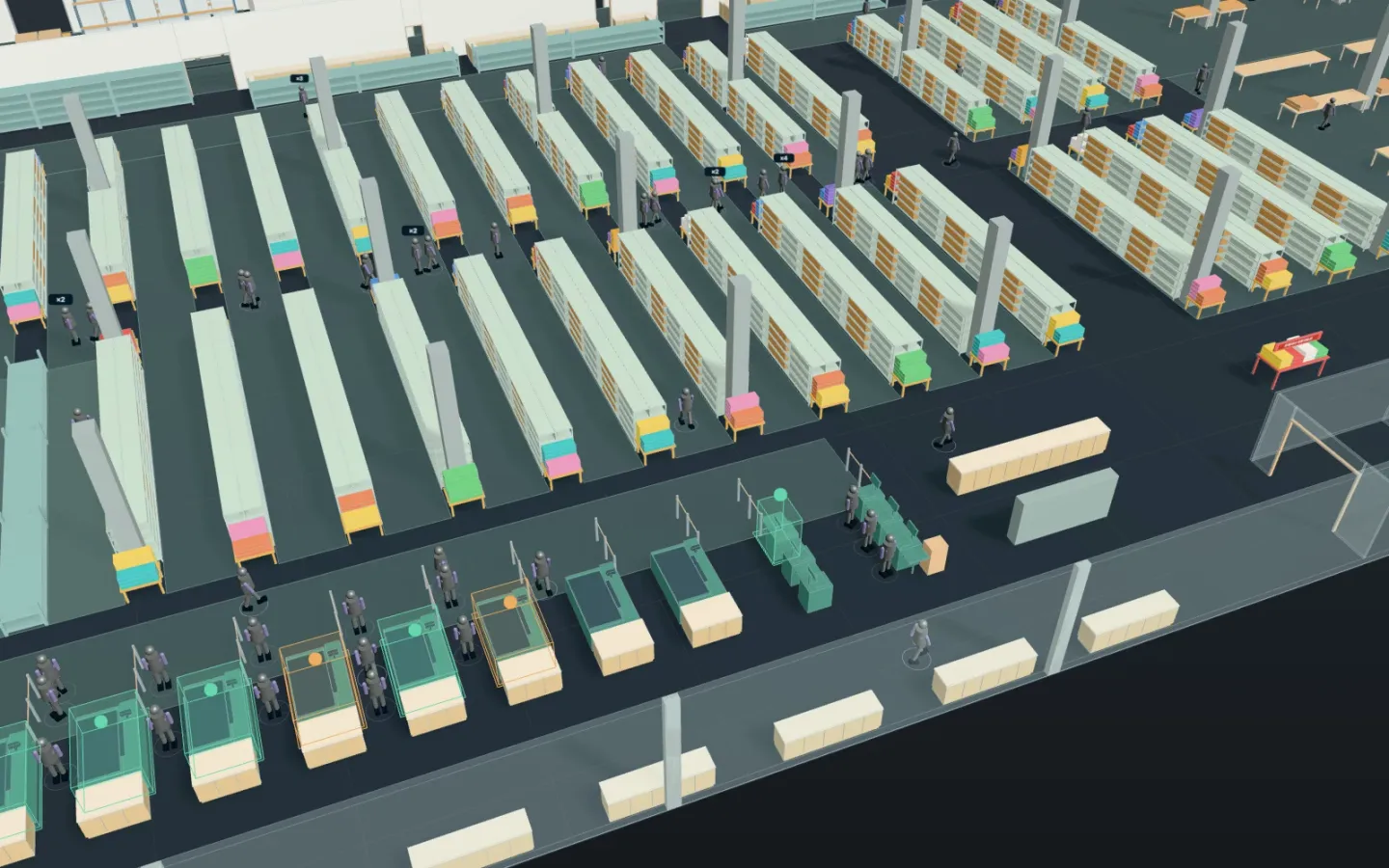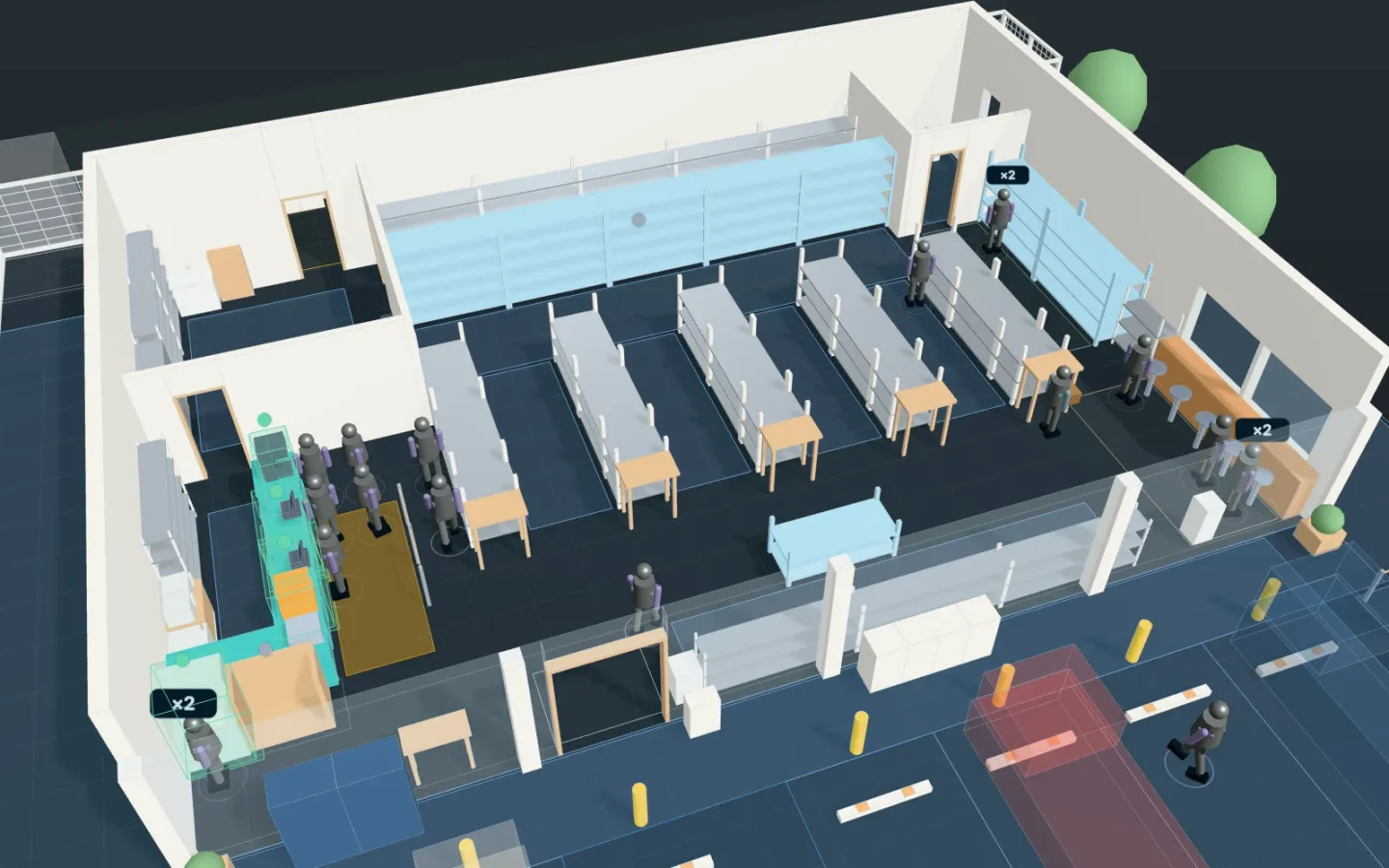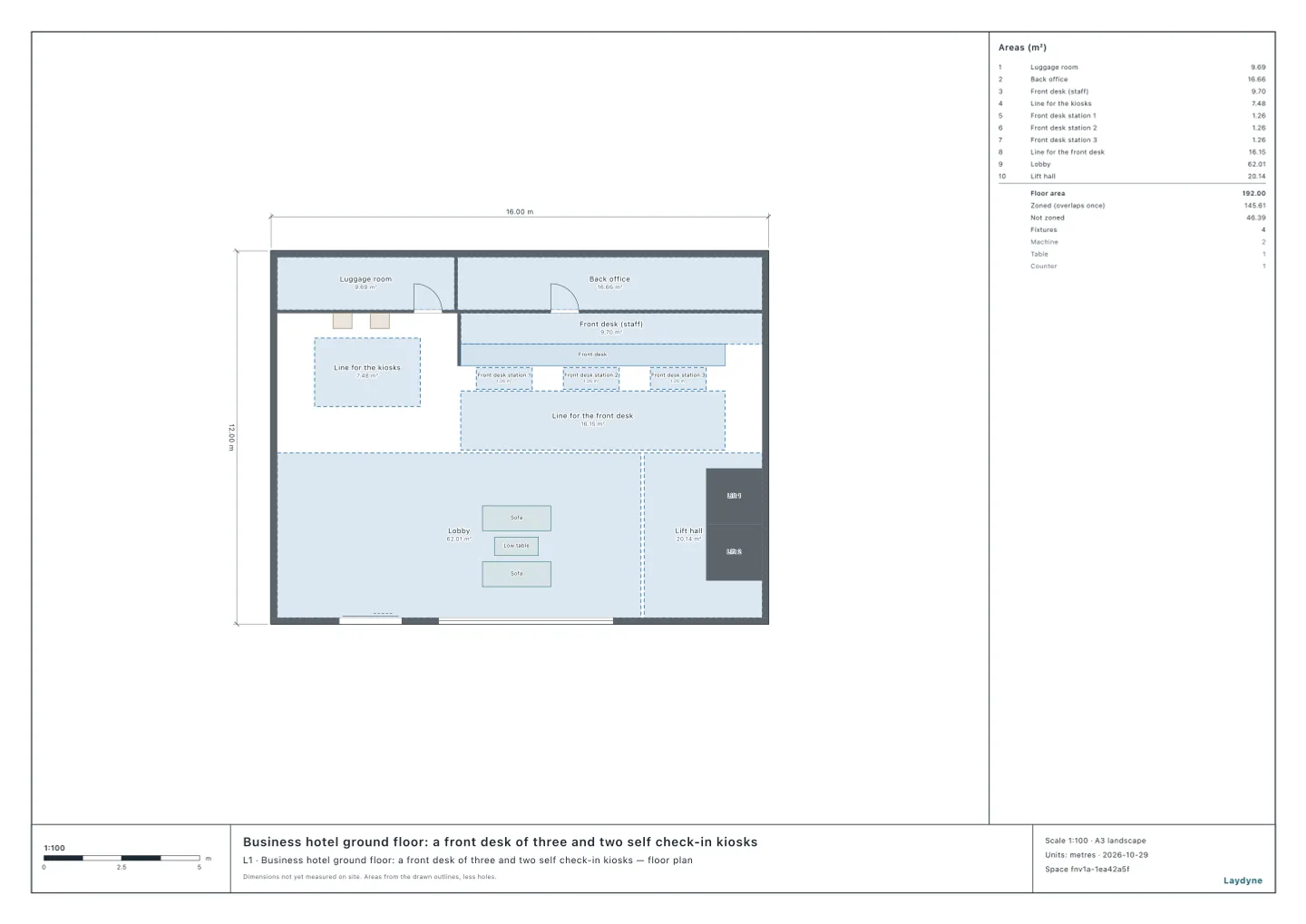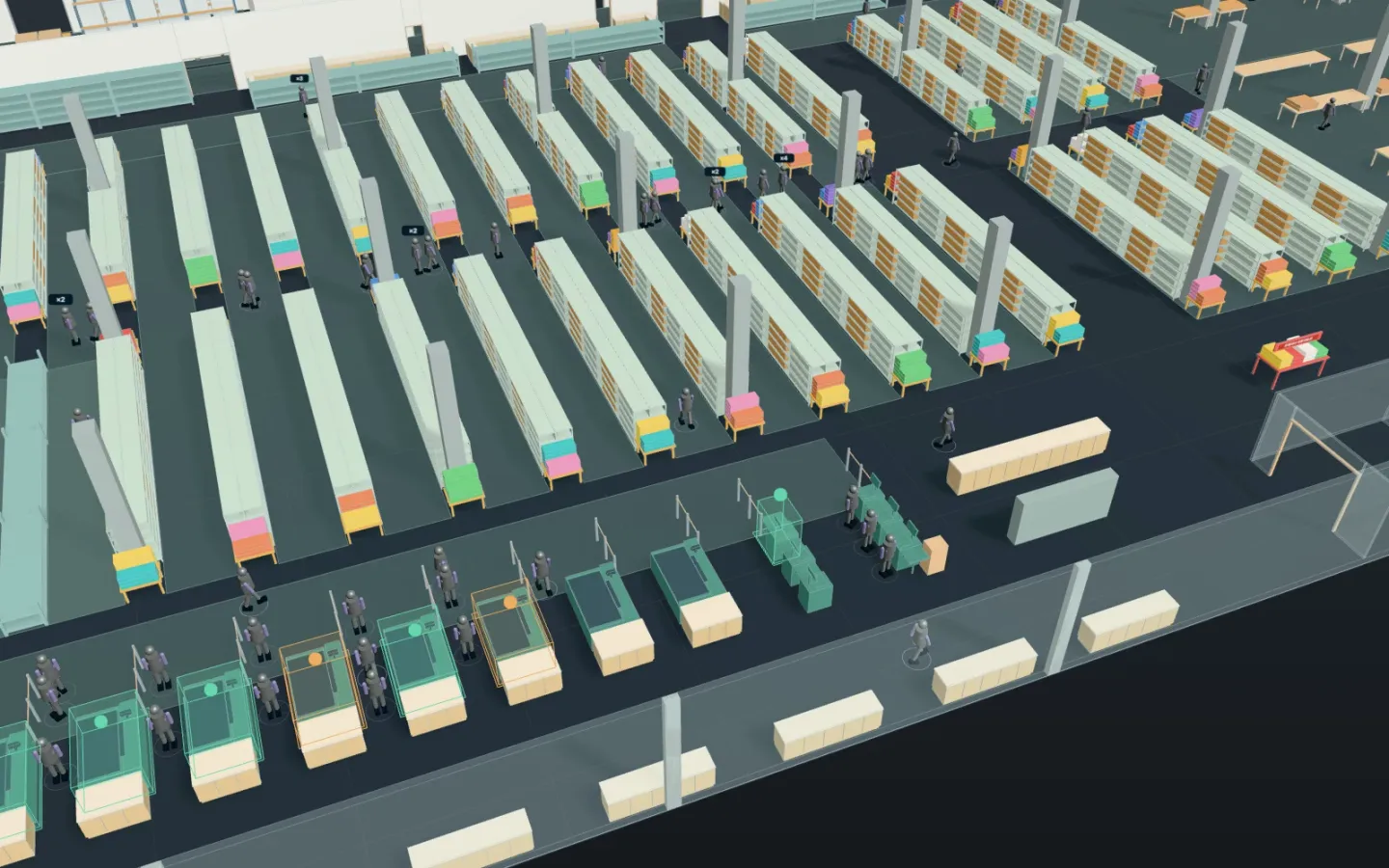
How many desks, checkouts and counters a place needs, and how many people at them, depends on how many people come at the busiest time and how long each takes. Here are eight scenes that an AI simulated in earlier articles (a hotel, a wedding, a supermarket, a ward office and more), with how the waits change as the desks and staff change. Each figure is the mean of twenty runs with different random draws, from the tool the AI calls over MCP (sweep_process_parameters).
1. More desks, more staff
| Scene | Compared | Fewer | More |
|---|---|---|---|
| A supermarket's checkouts (180 shoppers an hour) | Staffed checkouts, 7 → 8 | 1.3 min | 0.6 min |
| An airport's security (the morning departures) | Lanes, 3 → 4 | 5.1 min | 2.7 min |
| A wedding reception (200 guests, half each side) | At each desk, 1 → 2 | 14.9 min | 2.1 min |
| A hotel's check-in (110 arrivals) | Front desk clerks, 1 → 2 | 69.3 min | 2.0 min |
| A polling station (180 an hour, two desks) | Booths, 3 → 4 | 4.5 min | 0.4 min |
| A ward office's counters for registering a move | Counters, 6 → 8 | 43.9 min | 13.7 min |
| A convenience store at lunch (150 an hour, two staff) | One cashier and one stocking → both at the checkouts | 8.3 min | 2.2 min |
| A hospital's billing (250 patients) | Billing clerks, 3 → 4 | 40.5 min | 15.5 min |
- Each wait is the measure its article reported: the mean wait at the supermarket, the wedding, the hotel and the ward office; the time a standard passenger spends at security; the wait for a booth at the polling station; the time from joining the checkout queue to paying at the convenience store; and the time until the bill is ready at the hospital.
- The people, the times and how they arrive are each article's assumptions.
2. What the table shows
- One more, when there are too few, counts most. At the hotel's front desk, 110 arrivals wait 69.3 minutes on average with one clerk and 2.0 minutes with two. Once the work coming in is more than the desks can do, the line keeps growing.
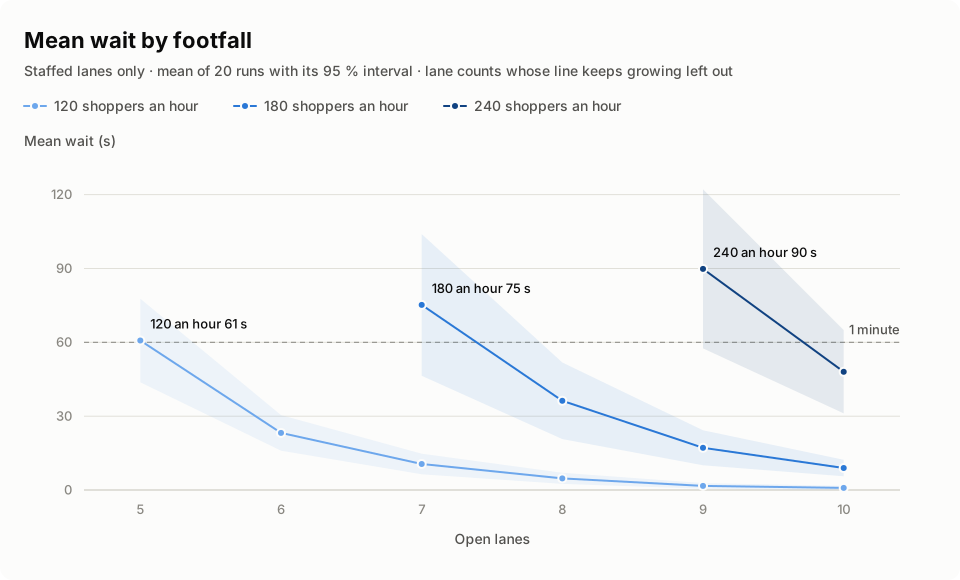
- Cover the workload, then add one more checkout. With 180 shoppers an hour (6.1 checkouts of work), six checkouts let the line keep growing; seven keep the mean wait to 1.3 minutes, eight to 0.6.
- The line moves. At the ward office, where residents register a move, eight counters instead of six cut that wait from 43.9 minutes to 13.7, but as people finish the move sooner they reach the National Health Insurance counters sooner, and the wait there rises from 9.9 minutes to 19.3.
- How the staff are used counts too. At the convenience store, with both staff at the checkouts and one stepping away only to stock, the time to pay falls from 8.3 minutes to 2.2, compared with one cashier and one person stocking.
3. The articles
- How many checkouts should be open?
- How many security lanes?
- How many people at the wedding reception desk?
- How long do guests wait to check in?
- A polling station's layout: how many desks, how many booths?
- How many counters at the ward office?
- How many people does a convenience store need at lunch?
- How long do outpatients wait to pay at a hospital?
4. How to ask an AI
At the busiest hour 120 people come, and each takes 2 minutes at the desk on average. How many staff keep the mean wait under 3 minutes? Simulate it 20 times and compare.
5. What this does not check
- The waits come from simulations with assumed numbers, times and arrivals. Put in your own records: when people came, and how long each took.