Robot deployment simulation software
Try the robots in 3D before you buy: how many, and where they go.
Laydyne lets you compare robot work, staff tasks, charging and lift demand in a spatial model. Adapt a serving, cleaning, delivery or picking example and compare the operating proposal with a different layout.
Start with a free account. Simulations are estimates and require Pro.
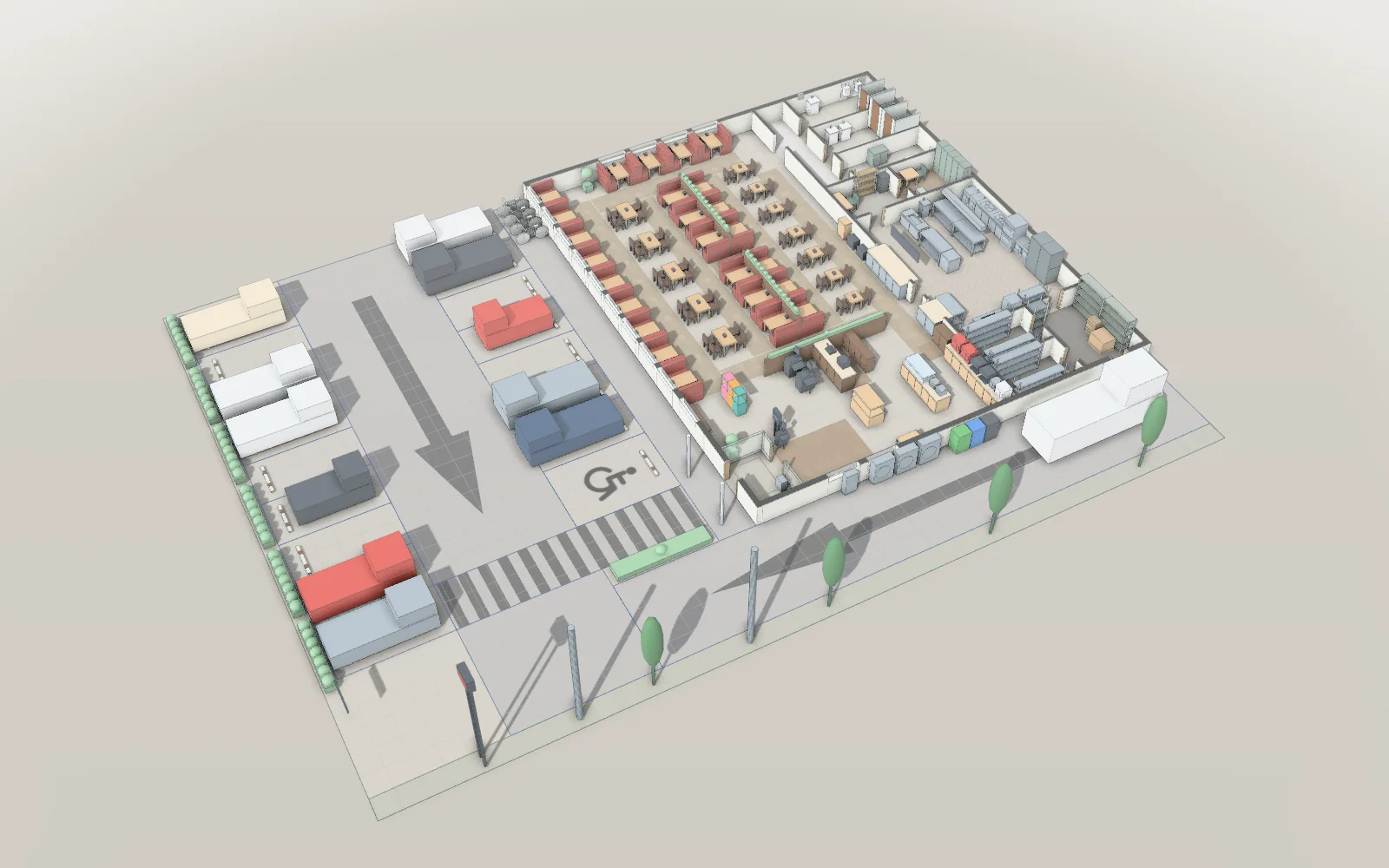
- 30 × 40 mModel floor dimensions
- 422Parts in the model
- 11Articles with worked results
What you can do for this space
Robot operations
Test robot availability, charging, staff work and lift queues.
Robot workspaces in 3D
Inspect stations, passages and floor connections in 3D.
Robot proposal documents
Export workspace plans and drawn equipment quantities.
Adapt the robot model with AI
Ask a connected AI to edit the workspace and inspect routes.
Robots · Robot operations
Compare the fleet with the work it has to finish.
Set tasks, travel, charging and operating windows for an approximate shift. Compare fleet options or a layout change using matched demand and inspect waits, unit work and unfinished tasks.
- Compare fleet availability
- Test charging and lift demand
- Compare robot and layout proposals
Results from worked examples
- Moving the packing benches nearer the pick zones cut the mean wait for a robot at stand A from 10.8 minutes with 4 robots in the original layout to 2.3 minutes with 3.
- A second serving robot cuts the plates the servers run from 30.2 parties to 7.5 and their walking from 3.99 km to 2.55 km.
- Replacing today’s two cleaners (done at 0:33, 5.10 staff hours) with one cleaner and two robot vacuums finishes the night at 1:15 with 3.25 staff hours, 36% fewer.
Robots · Robot workspaces in 3D
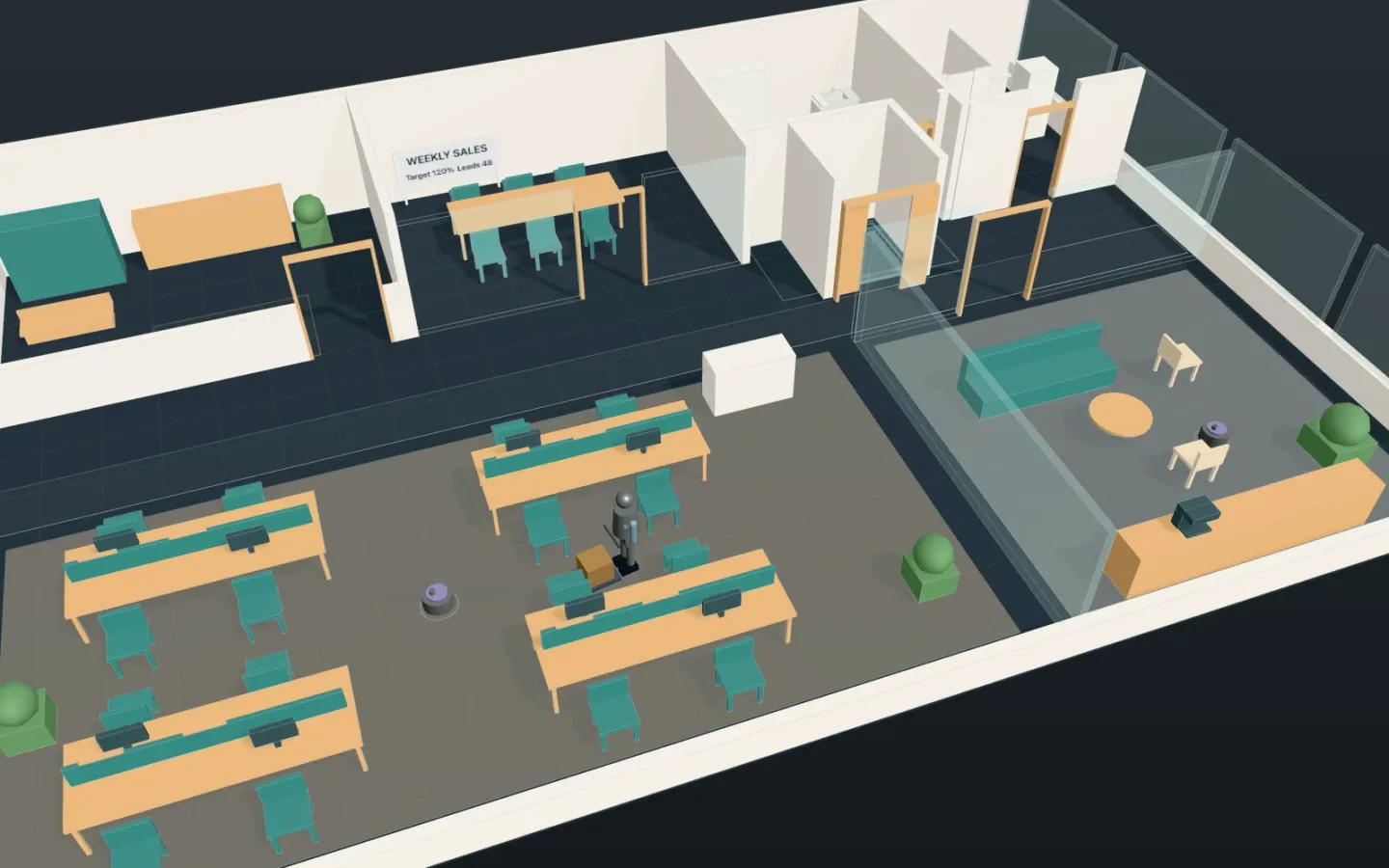
Show the space the robot proposal depends on.
View the restaurant, ward or logistics model around the proposed robot work. Use the spatial model to discuss task locations and the placement of doors, stations and lift connections.
- View robot work areas in 3D
- Inspect station and passage positions
- Review lift and floor connections
Robots · Robot proposal documents
Make the layout behind the proposal reviewable.
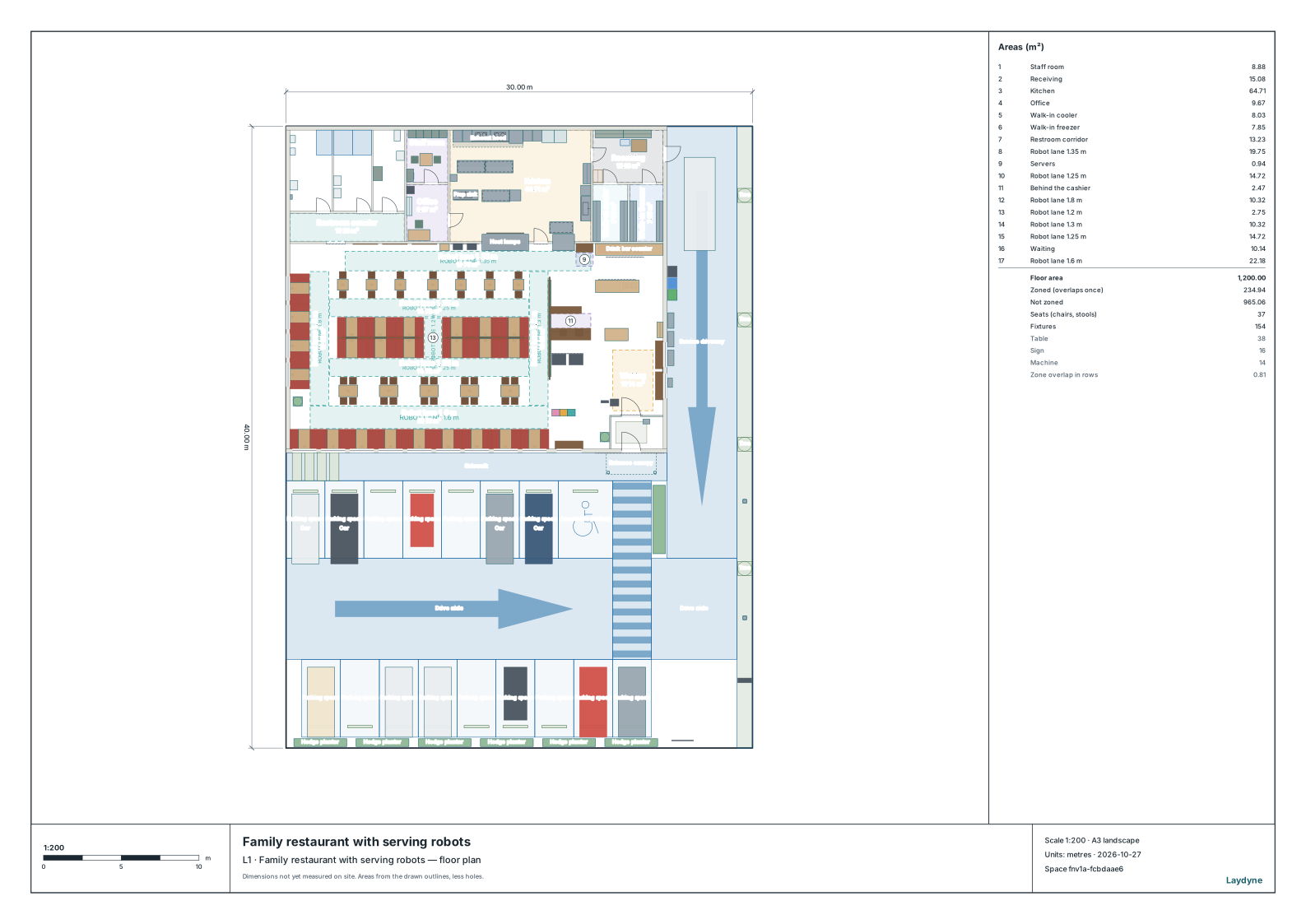
Choose the work areas and floors needed to explain the robot proposal. Export PDF or SVG drawings and model quantities for the operator and integration team.
- Choose robot work areas for the plan
- Export workspace drawings as PDF
- Add drawn equipment quantity sheets to the PDF
Robots · Adapt the robot model with AI
Turn the proposal into changes the model can show.
Use a connected AI to move stations, draw charging locations or revise doors in the model. Ask it to inspect the specified robot’s geometric reach before comparing the operating scenarios.
- Ask AI to move task stations
- Draw charging and waiting locations
- Inspect robot reach through passages
Start with your space
Open a model for free
Open a serving, cleaning, delivery or picking example and adapt its workspace.
Start from this model for freeAsk your AI
Ask the AI to change task locations and compare fleet or layout options.
How many robots?
In this restaurant (as drawn, 73 parties at a weekday dinner), how do the dishes the floor staff carry and how far they walk change with one, two and three serving robots? Compare 20 runs of each.
Quotation from Read the article
Can robot vacuums cut the night cleaning crew?
For this three-storey office, compare night cleaning starting at 22:00 with one to three cleaners and zero to three robot vacuums. Give the finish time and staff hours, and check whether the work finishes before the building opens at 07:00.
Quotation from Read the article
How many delivery robots does an office with one lift need?
In this office with one lift, deliver 24 parcels from the mailroom, 12 to each of the two upper floors. Vary the number of delivery robots and compare when the last parcel is handed over and how long robots wait for the lift.
Quotation from Read the article
Check, export and share
Review task, charging and movement assumptions, then export the proposal.
Models you can start with
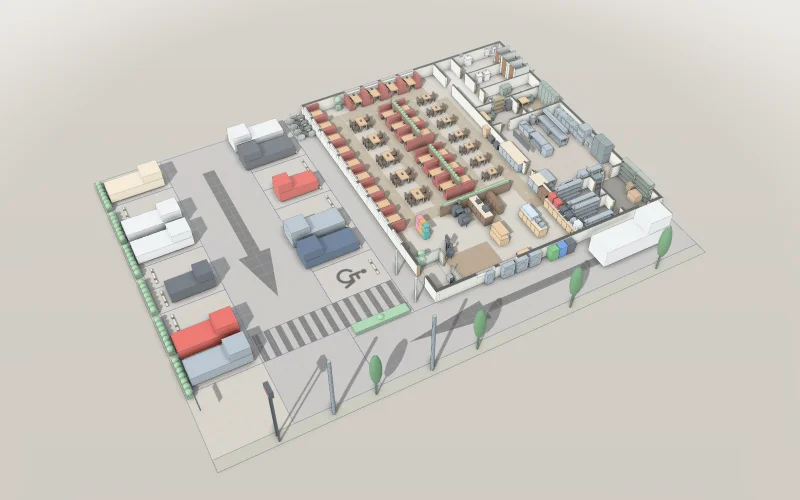
Family restaurant with serving robots
Booths and tables on robot lanes, a kitchen pass with robot chargers, drink bar, cashier and car park.
- Parking
- 17 parking stalls, 1 for wheelchair users
- Size
- 30 × 40 m
Opens in Studio without an account.
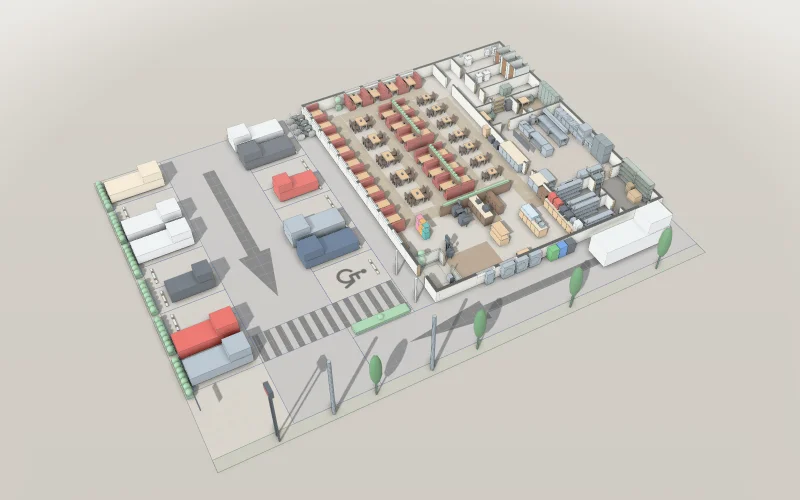
Serving robots at the dinner peak
See how many serving robots a family restaurant needs at the dinner peak, and how much carrying they take off the floor staff.
Explore example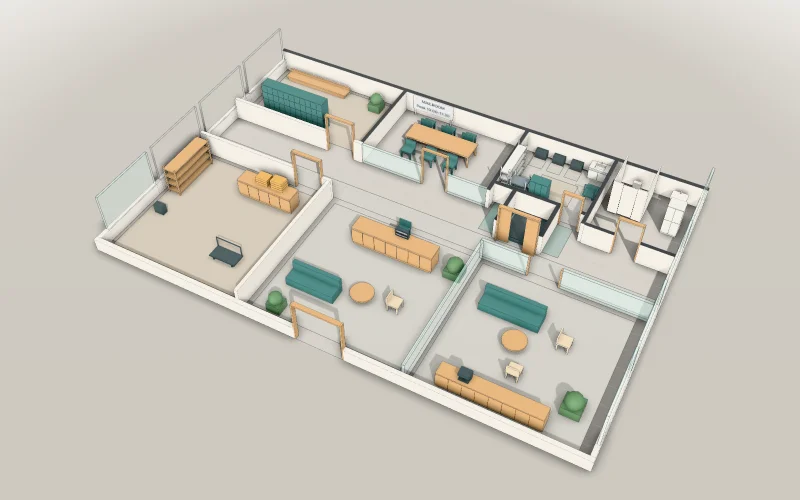
Office night cleaning
Plan a night shift for a three-storey office and see what robot vacuums change in finish time and staff hours.
Explore example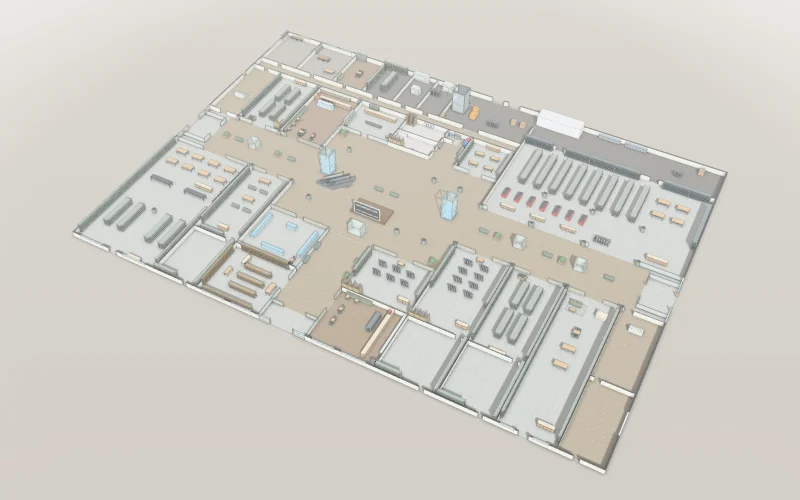
Mall night scrubbing
Size a scrubber fleet for a three-level mall at night: how many robots, and where they fill and drain.
Explore example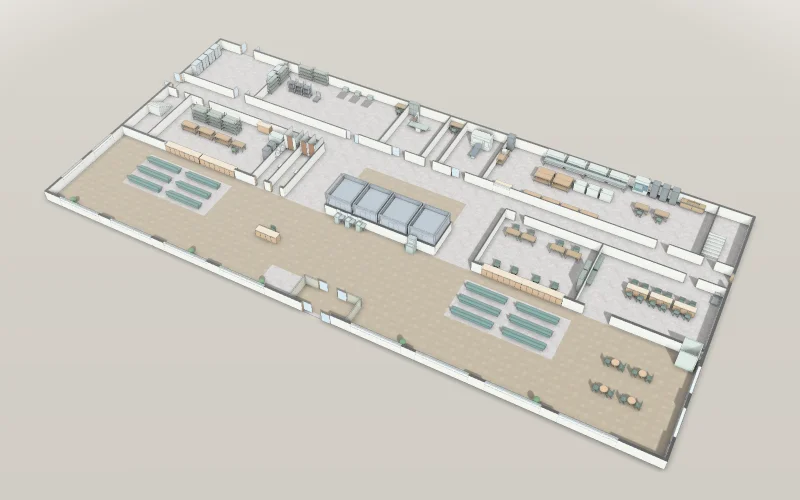
Hospital morning specimen round
See whether a third delivery robot or a lift rule gets the morning blood specimens to the lab sooner.
Explore example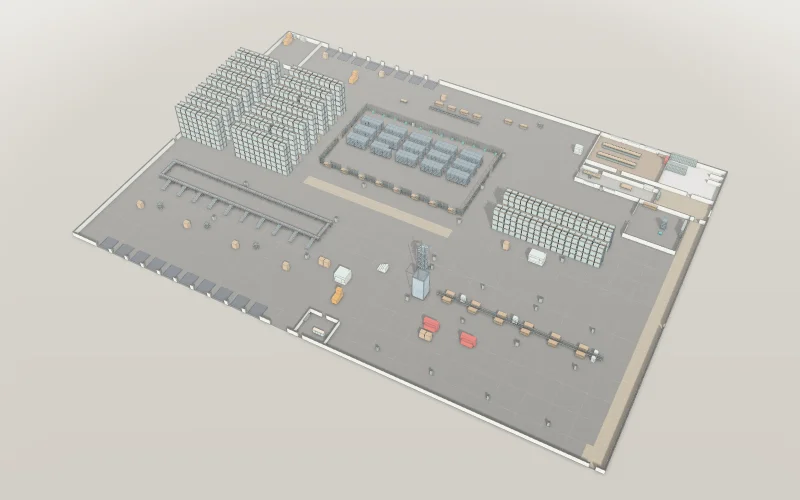
Robot picking shift
See whether the pick stations or the robot fleet limit a goods-to-person picking shift.
Explore example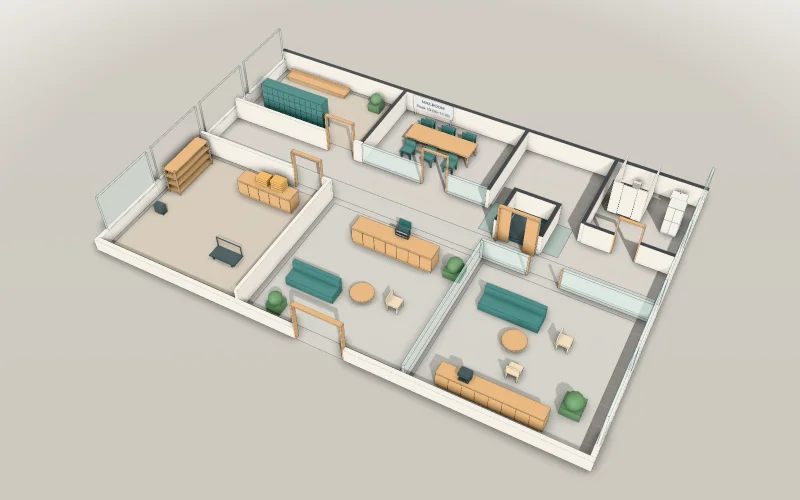
Building deliveries
Deliver 24 parcels from the mailroom to two office floors using one shared lift.
Explore example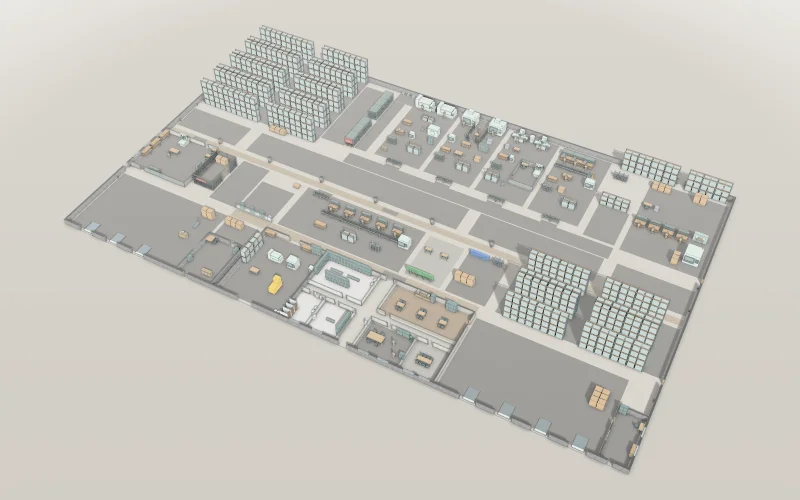
Components factory: trucks, forklifts and AMRs
Are the trucks waiting on the forklift or on the AMRs? See which extra vehicle gets them off the docks sooner.
Explore example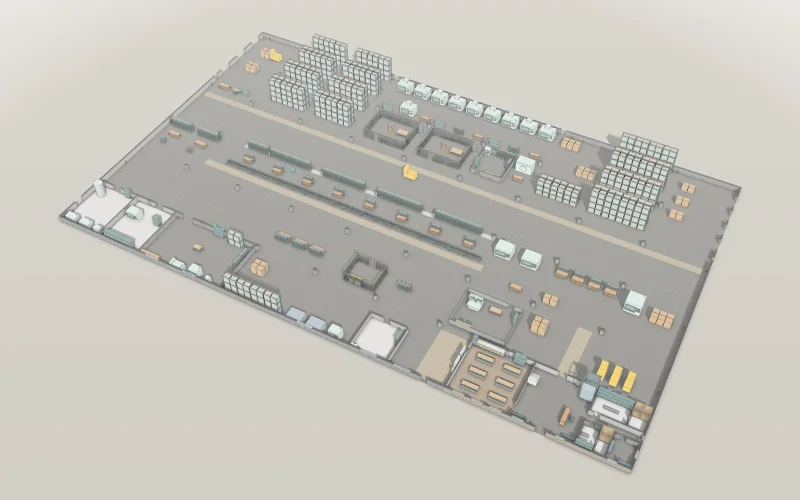
Assembly plant shift
Can the plant ship every order within the hour? See whether test, AMRs or machining decides.
Explore example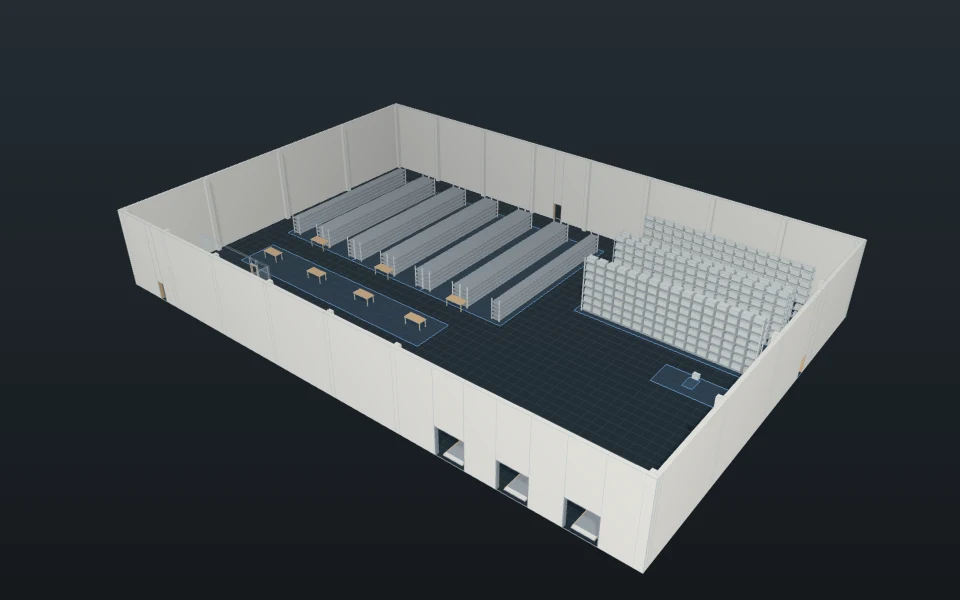
Compare robot counts and layout changes
Saved fleet and layout options, repeated comparisons and proposal drawings.
Explore example
Frequently asked questions
How many serving robots?
A second serving robot cuts the plates the servers run from 30.2 parties to 7.5 and their walking from 3.99 km to 2.55 km.
Read the articleCan robot vacuums cut the night cleaning crew?
Replacing today’s two cleaners (done at 0:33, 5.10 staff hours) with one cleaner and two robot vacuums finishes the night at 1:15 with 3.25 staff hours, 36% fewer.
Read the articleHow many picking robots (AMRs)?
Beyond 24 robots the time per line does not change: 24 robots are 0.7 s slower than 32 (95% interval −0.1 to 1.4 s), so no difference is shown.
Read the articleWhich gets trucks off the docks sooner, an AMR or a forklift?
A second forklift, not a third AMR, cuts the inbound trucks' time at the docks from 17.9 to 6.1 minutes (66% less) and the outbound trucks' time from 23.1 to 8.6 minutes (63% less).
Read the articleWhere is the plant’s bottleneck?
The bottleneck is the test: with a 2-minute test instead of 3, all 11 orders ship in every one of the 20 runs, the last at 55.0 minutes.
Read the articleThe space your robots work in, built with AI.
Family restaurant with serving robots
Start from this model for freeArticles for this use
Robot operations (11)
A robot fleet proposal from a customer's warehouse drawing
Moving the packing benches nearer the pick zones cut the mean wait for a robot at stand A from 10.8 minutes with 4 robots in the original layout to 2.3 minutes with 3.
How many serving robots?
A second serving robot cuts the plates the servers run from 30.2 parties to 7.5 and their walking from 3.99 km to 2.55 km.
Can robot vacuums cut the night cleaning crew?
Replacing today’s two cleaners (done at 0:33, 5.10 staff hours) with one cleaner and two robot vacuums finishes the night at 1:15 with 3.25 staff hours, 36% fewer.
How many delivery robots does a hospital need for its specimens?
With today’s two delivery robots, specimens take 17.2 minutes to reach the lab, and up to 6 robots and trolleys queue at the service lift.
How many picking robots (AMRs)?
Beyond 24 robots the time per line does not change: 24 robots are 0.7 s slower than 32 (95% interval −0.1 to 1.4 s), so no difference is shown.
Which gets trucks off the docks sooner, an AMR or a forklift?
A second forklift, not a third AMR, cuts the inbound trucks' time at the docks from 17.9 to 6.1 minutes (66% less) and the outbound trucks' time from 23.1 to 8.6 minutes (63% less).
Where is the plant’s bottleneck?
The bottleneck is the test: with a 2-minute test instead of 3, all 11 orders ship in every one of the 20 runs, the last at 55.0 minutes.
How many floor-scrubbing robots does a mall need for its night scrub?
With four floor-scrubbing robots, no robot stops to charge while a section waits, and the last section is done at 0:59.
How many delivery robots does an office with one lift need?
Going from two delivery robots to four, the last of the 24 parcels is handed over at 13.7 minutes instead of 25.3 minutes.
How many robots?
More robots stop helping once something else decides: 32 picking robots take 320.1 seconds a line against 320.8 with 24, and a third AMR leaves a factory's inbound trucks at 17.9 minutes while a second forklift brings them to 6.1.
Where is the bottleneck in a warehouse or a plant?
A second person at reception cuts the trucks' time from 23.6 minutes to 8.3, and a 2-minute test lets the plant ship all 11.0 orders.